
Body piercing is more than simply choosing a piece of jewellery.
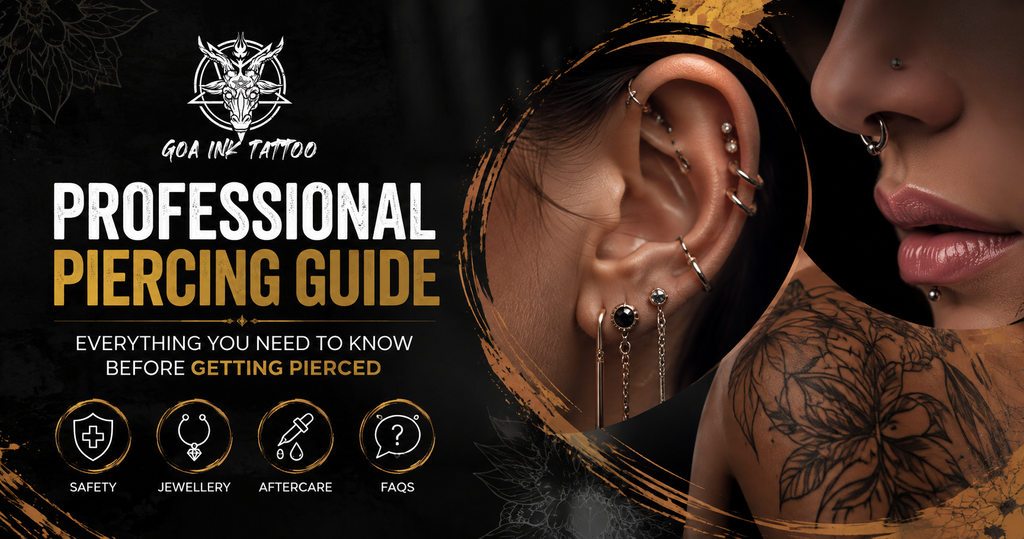
Whether you’re considering your first ear piercing, adding a new piercing to your collection or exploring a different form of self-expression, choosing the right professional piercing studio and understanding proper aftercare are important steps.
A piercing creates an opening through the skin, which means the procedure needs to be approached with appropriate hygiene, technique, jewellery selection and aftercare.
At Goa Ink Tattoo & Piercing Studio in Greater Noida, piercing is part of our body-art experience, giving clients an opportunity to express their individual style through personalised body modifications.
But before getting pierced, it’s worth understanding what makes a professional piercing different, how to prepare, what happens during the procedure and how to care for your new piercing.
This Professional Piercing Guide covers the essentials of professional piercing, body piercing safety and piercing aftercare.
What Is Professional Piercing?
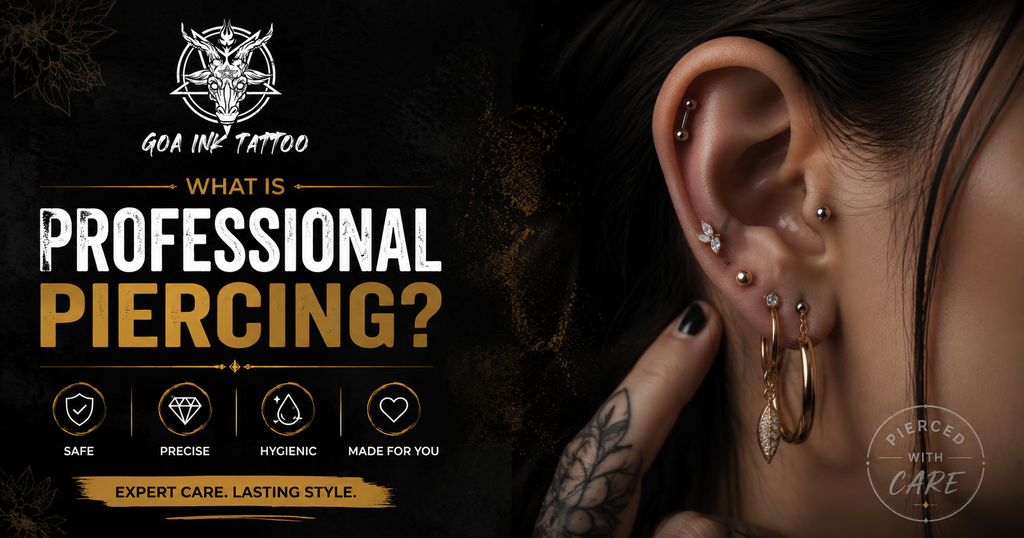
Professional piercing involves having a body piercing performed by an experienced piercer using appropriate equipment, technique and jewellery.
A professional approach should begin before the actual piercing.
A good piercer should be willing to discuss:
✓ Your desired piercing
✓ Suitable placement
✓ Your anatomy
✓ Jewellery options
✓ The piercing procedure
✓ Expected healing
✓ Aftercare
✓ Potential complications
The Association of Professional Piercers recommends choosing an experienced piercer and looking for a studio that follows appropriate safety practices. It also recommends that a piercer should be able to discuss anatomy, jewellery, healing and aftercare with clients.
Professional piercing is therefore about much more than making a hole and inserting jewellery.
It’s about making an informed decision and receiving appropriate care throughout the process.
Why Choose a Professional Piercing Studio?
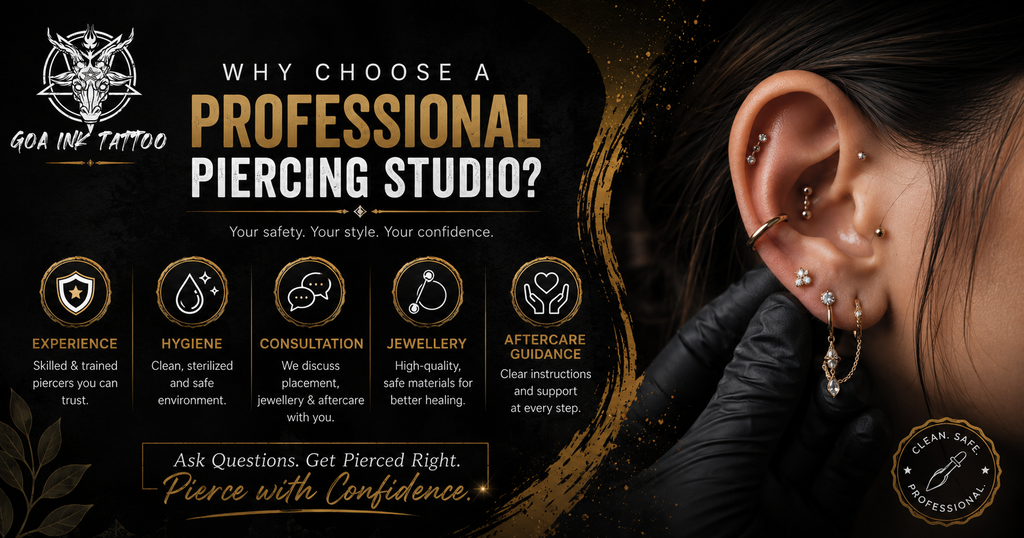
A piercing breaks the skin’s protective barrier, so hygiene and technique matter.
The American Academy of Dermatology recommends choosing a qualified piercer in a licensed studio because improperly performed piercings can lead to complications such as infection or premature closure.
When choosing a piercing studio, consider:
Experience
Ask about the piercer’s experience and training.
Hygiene
The studio should maintain appropriate hygiene and cleanliness throughout the piercing process.
Consultation
Your piercer should be willing to discuss placement, jewellery and aftercare before beginning.
Jewellery
The quality and suitability of initial jewellery can affect the healing process. The Association of Professional Piercers notes that body jewellery should be appropriately sized and made from suitable materials.
Aftercare Guidance
A professional studio should explain how to care for your new piercing and what to expect during healing.
Don’t be afraid to ask questions before getting pierced.
Popular Types of Body Piercings
There are many different piercing options, and the right choice depends on your personal style, anatomy and lifestyle.
Earlobe Piercing
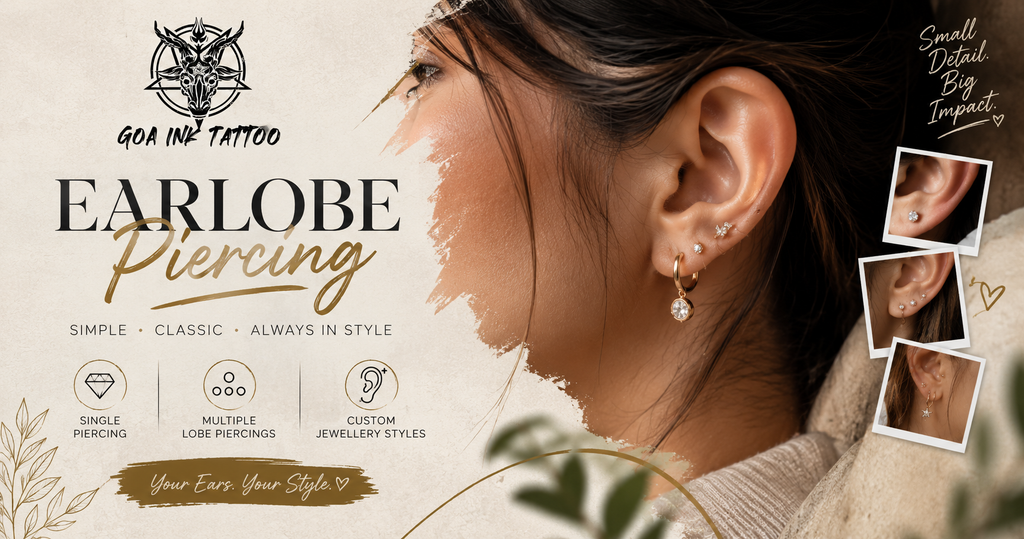
Earlobe piercings are among the most common piercing choices and can be a simple option for someone getting their first piercing.
You can choose a single piercing, multiple lobe piercings or create a customised ear jewellery arrangement.
Cartilage Piercing
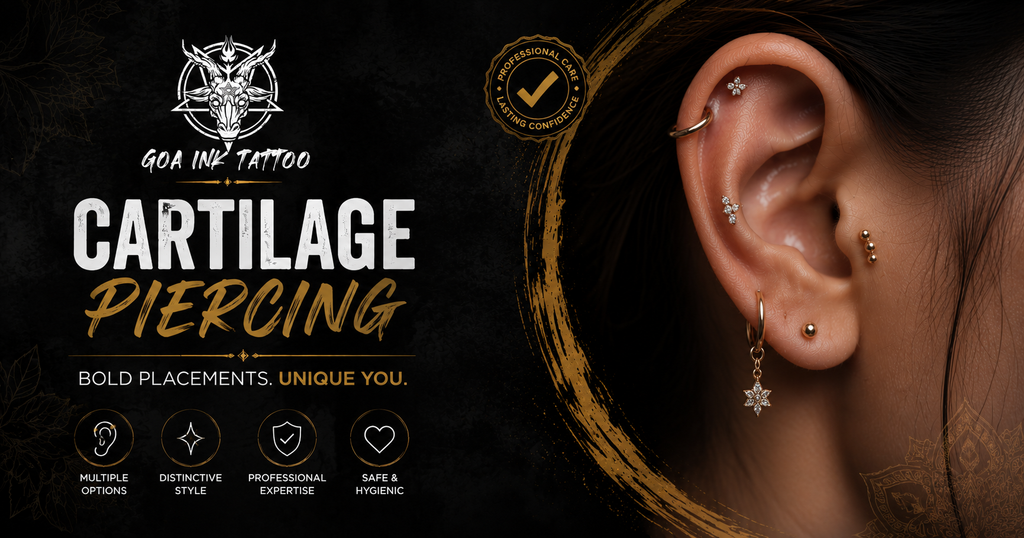
Cartilage piercings can include several different placements around the ear.
They can create a more distinctive look and can be combined with other ear jewellery.
Because cartilage differs from the earlobe, healing can also be different.
Nose Piercing
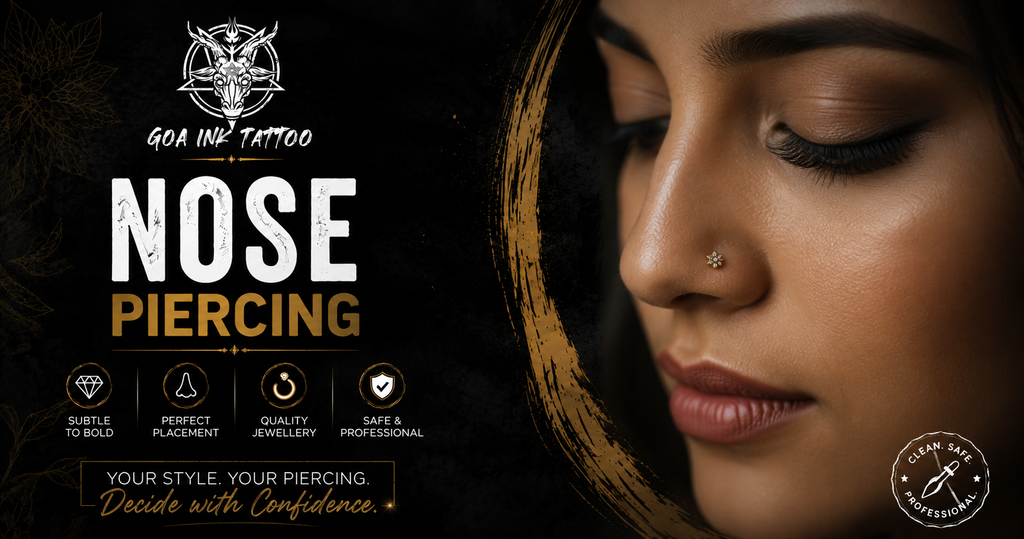
Nose piercings are a popular form of facial body art and can range from subtle jewellery to more noticeable styles.
Placement and jewellery selection should be discussed with your piercer before the procedure.
Other Body Piercings
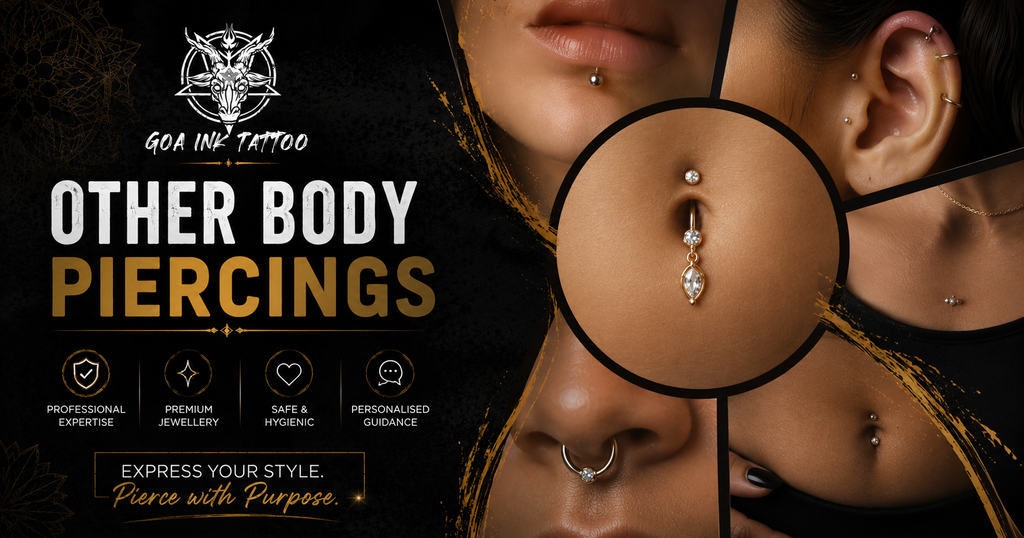
Depending on the studio and piercer, body piercing can include different areas of the body.
Before choosing a less common piercing, discuss your anatomy, jewellery, expected healing and aftercare requirements with a professional.
How to Prepare for a Piercing
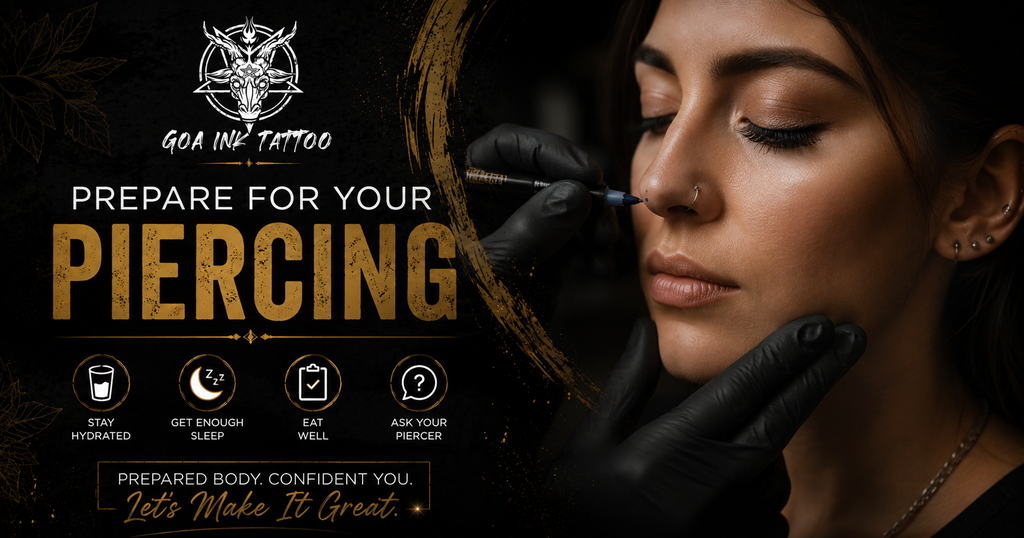
Good preparation can make your piercing appointment more comfortable and straightforward.
Eat Before Your Appointment

Unless a healthcare professional has given you different instructions, arriving without having eaten can make you feel uncomfortable during the appointment.
The Association of Professional Piercers recommends having eaten within four hours before a piercing appointment.
Stay Sober

Avoid arriving under the influence of alcohol or recreational drugs.
You should be alert and able to communicate clearly with your piercer.
Wear Appropriate Clothing
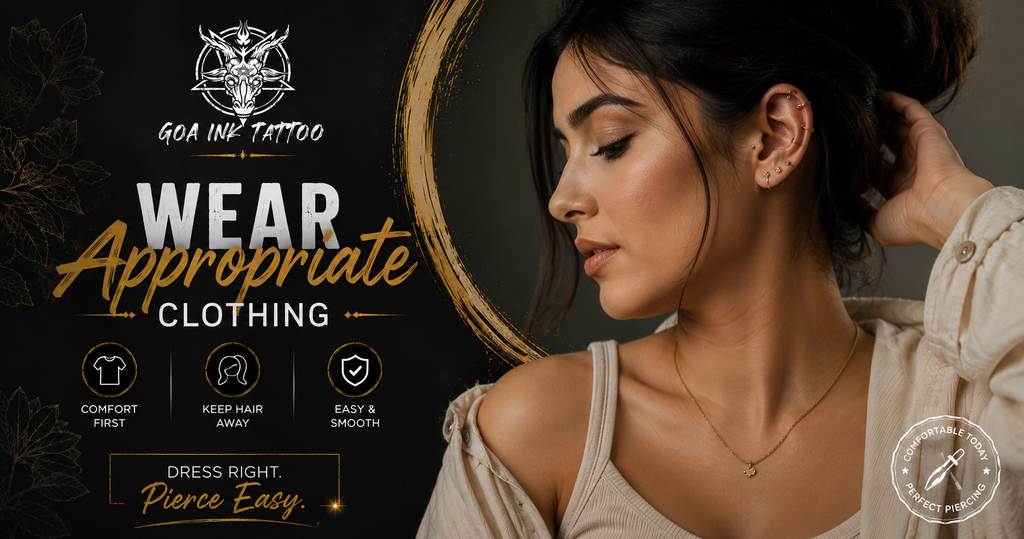
Choose comfortable clothing that doesn’t interfere with the area being pierced.
For ear piercings, keeping your hair away from the area can make the process easier.
Bring Identification
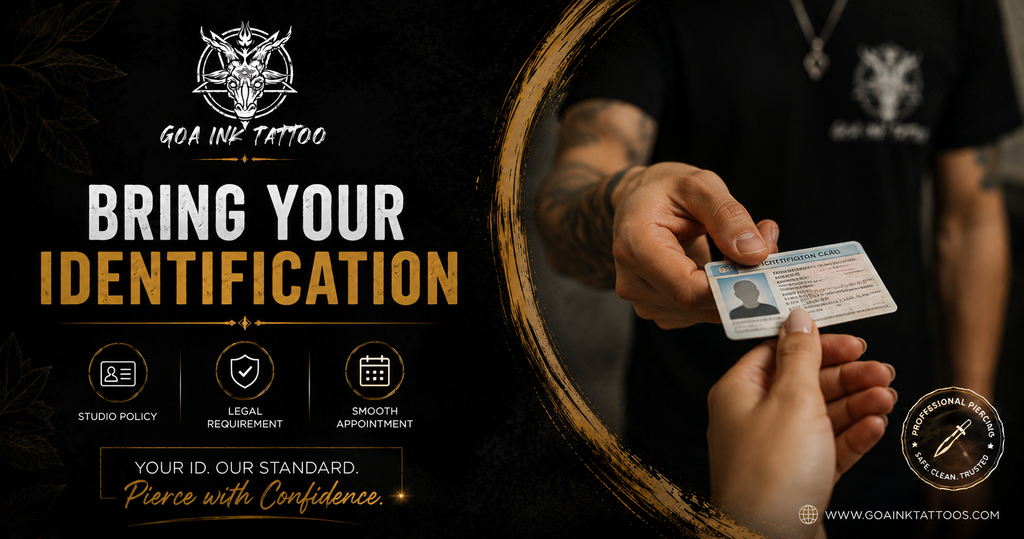
Depending on the studio’s policies and local requirements, you may need valid identification.
If you’re unsure about age or identification requirements, contact the studio before your appointment.
Discuss Health Concerns
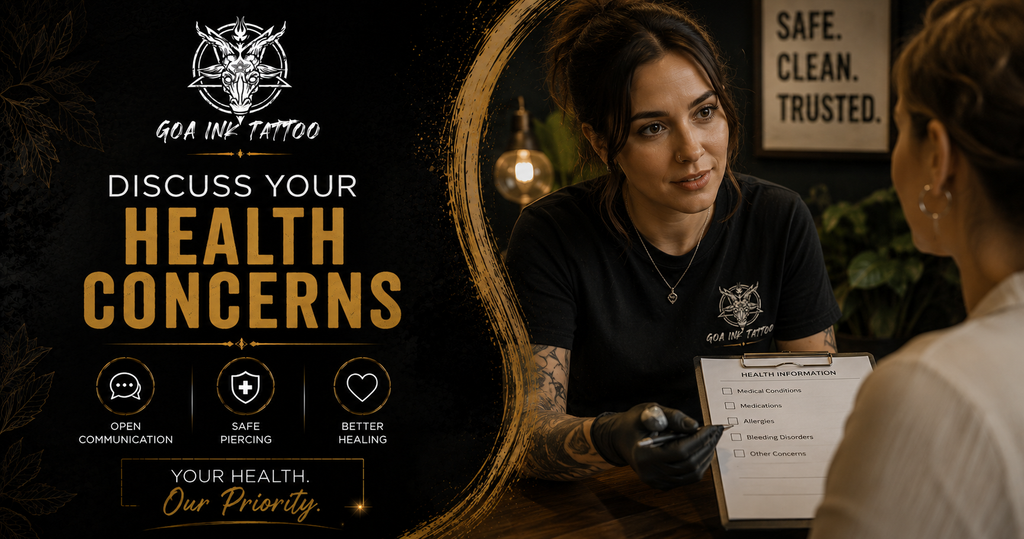
Tell your piercer about relevant concerns that could affect the piercing or healing process.
If you have a medical condition or take medication that could affect healing or bleeding, discuss it with an appropriate healthcare professional before proceeding.
What Happens During a Professional Piercing?
Knowing what to expect can make your appointment feel less intimidating.
Step 1: Consultation
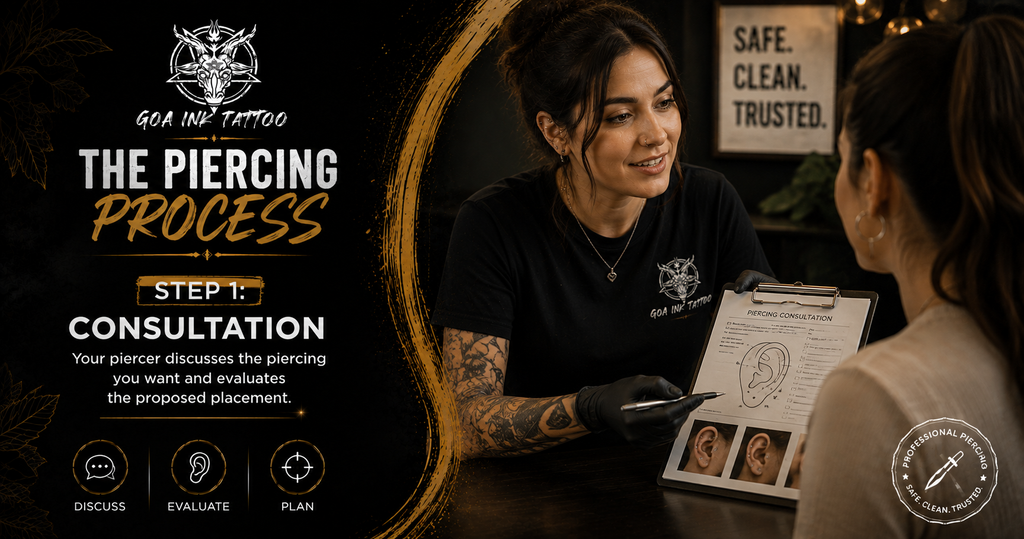
Your piercer discusses the piercing you want and evaluates the proposed placement.
Step 2: Placement
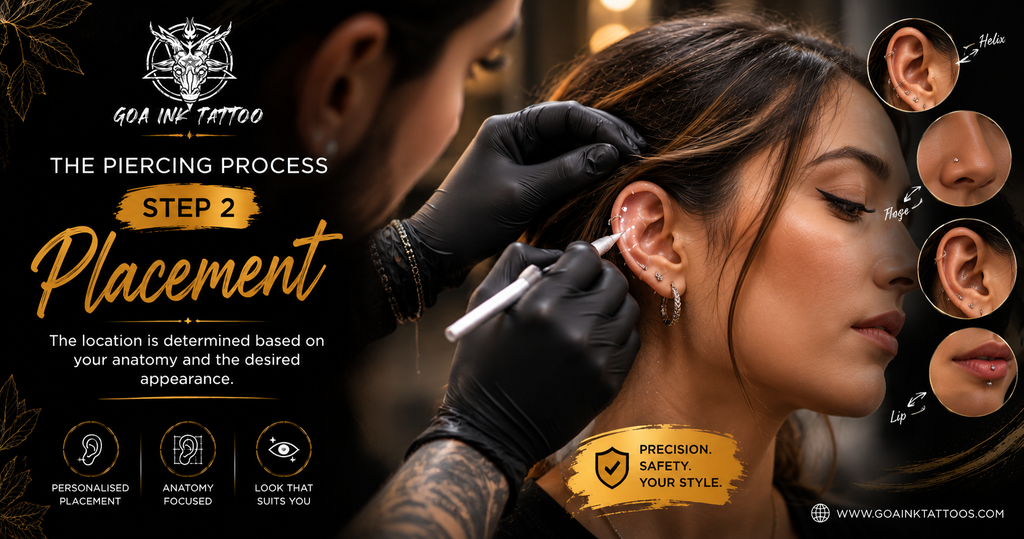
The location is determined based on your anatomy and the desired appearance.
Step 3: Jewellery Selection
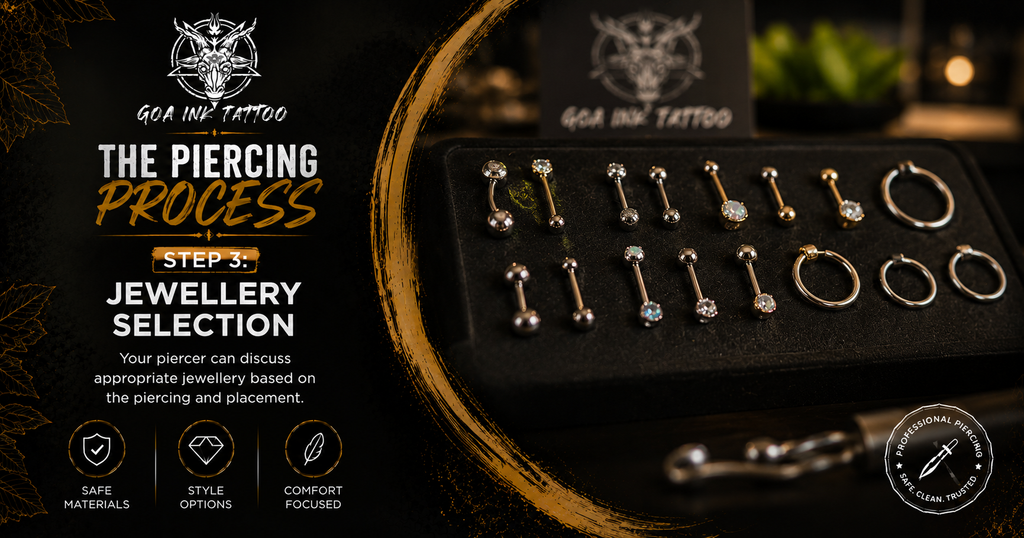
Your piercer can discuss appropriate Jewellery based on the piercing and placement.
Step 4: Piercing
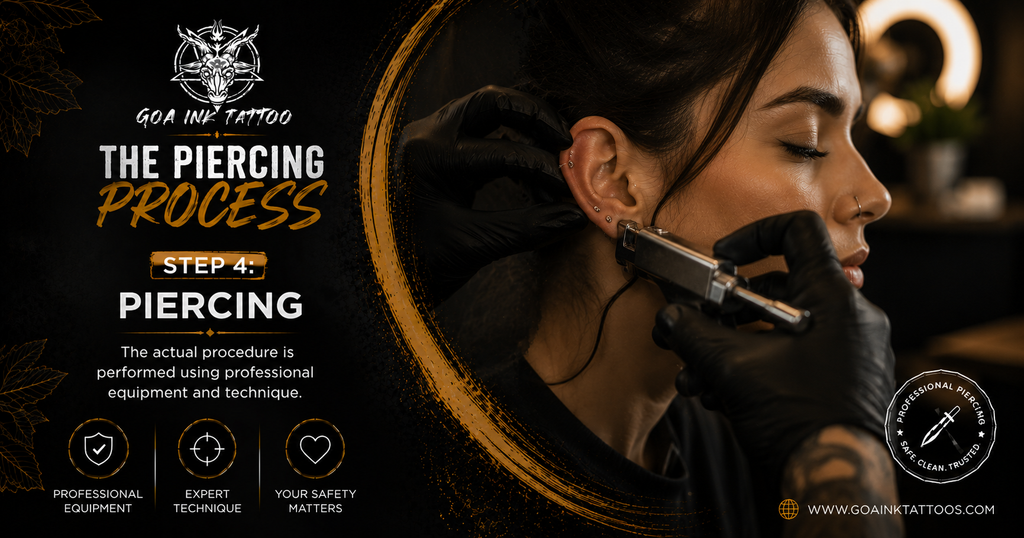
The actual procedure is performed using professional equipment and technique.
Step 5: Aftercare Instructions
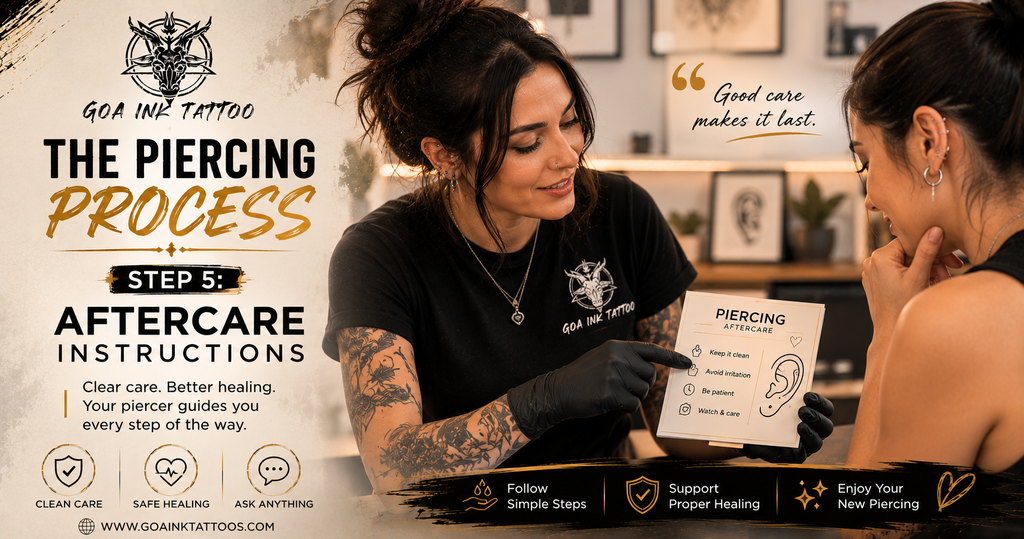
Before you leave, you should understand how to care for your new piercing and what signs to watch for during healing.
If you have questions, ask them before leaving the studio.
Body Piercing Safety: What Should You Look For?
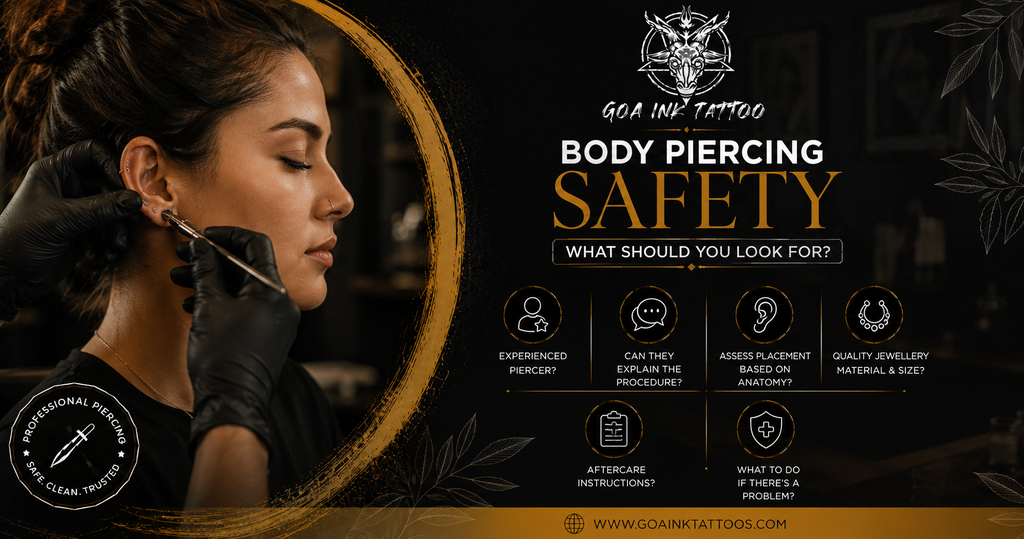
Safety should be one of your first considerations when choosing a piercing studio.
The Association of Professional Piercers highlights several factors clients should consider when selecting a piercer, including qualifications, jewellery quality, studio practices and the willingness of the piercer to answer questions.
Before getting pierced, consider asking:
Is the piercer experienced?
Can they explain the procedure?
Will they assess the placement based on anatomy?
What jewellery material and size will be used?
What aftercare instructions will I receive?
What should I do if I experience a problem?
A professional piercer should be comfortable answering these questions.
Choosing the Right Piercing Jewellery
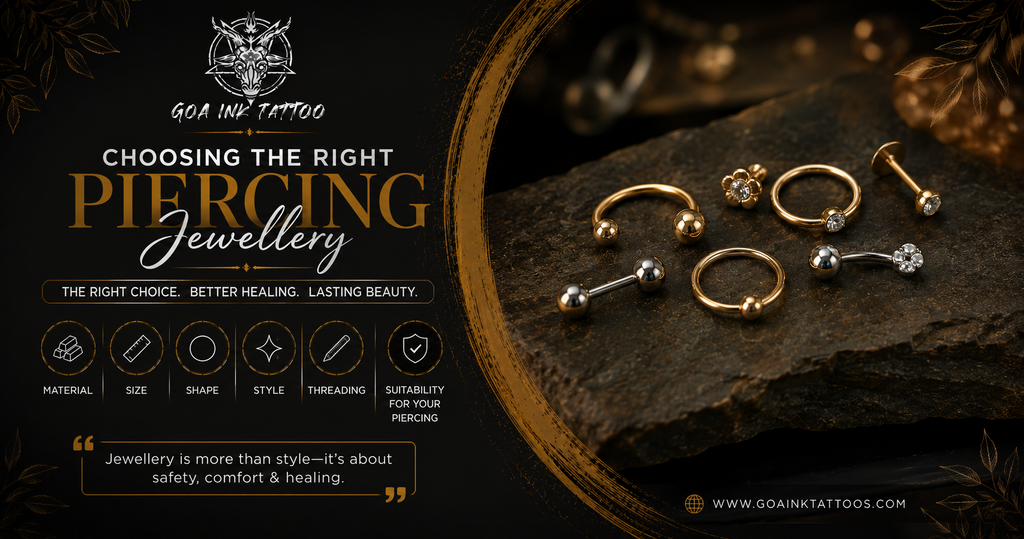
Jewellery isn’t simply an accessory.
The jewellery used for a fresh piercing needs to be appropriate for the placement and suitable for prolonged contact with the skin.
The Association of Professional Piercers identifies materials such as implant-grade titanium, certain implant-grade steel, niobium and appropriate solid gold as options for body jewellery, subject to applicable standards and individual suitability.
Jewellery should also be appropriately sized.
A piece that is too tight or unsuitable for the anatomy can create unnecessary pressure or irritation.
Ask your piercer about:
✓ Material
✓ Size
✓ Shape
✓ Style
✓ Threading
✓ Suitability for your piercing
Don’t choose jewellery only because it looks good in a photograph.
It should also be appropriate for a healing piercing.
Piercing Aftercare: How to Care for Your New Piercing
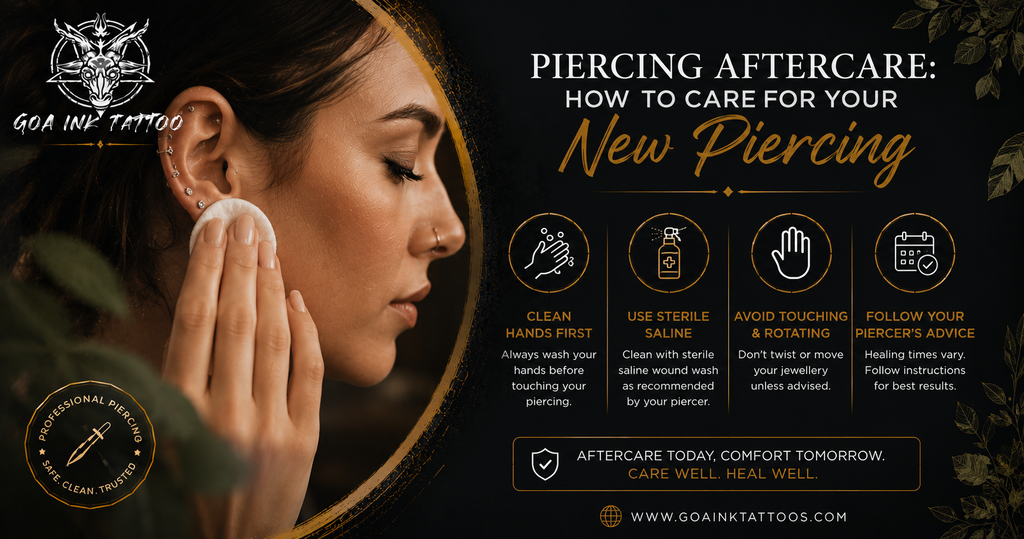
Aftercare is an important part of the piercing process.
Your piercer should provide instructions specific to your piercing.
General guidance from the Association of Professional Piercers includes washing your hands before touching the piercing, using sterile saline wound wash during healing and avoiding unnecessary movement or rotation of jewellery.
Wash Your Hands First
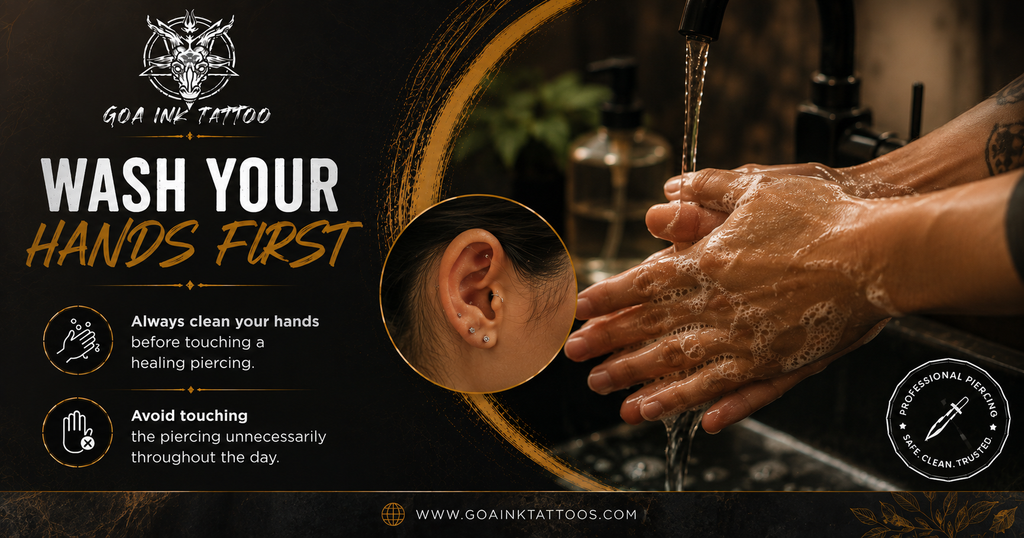
Always clean your hands before touching a healing piercing.
Avoid touching the piercing unnecessarily throughout the day.
Use Appropriate Cleaning
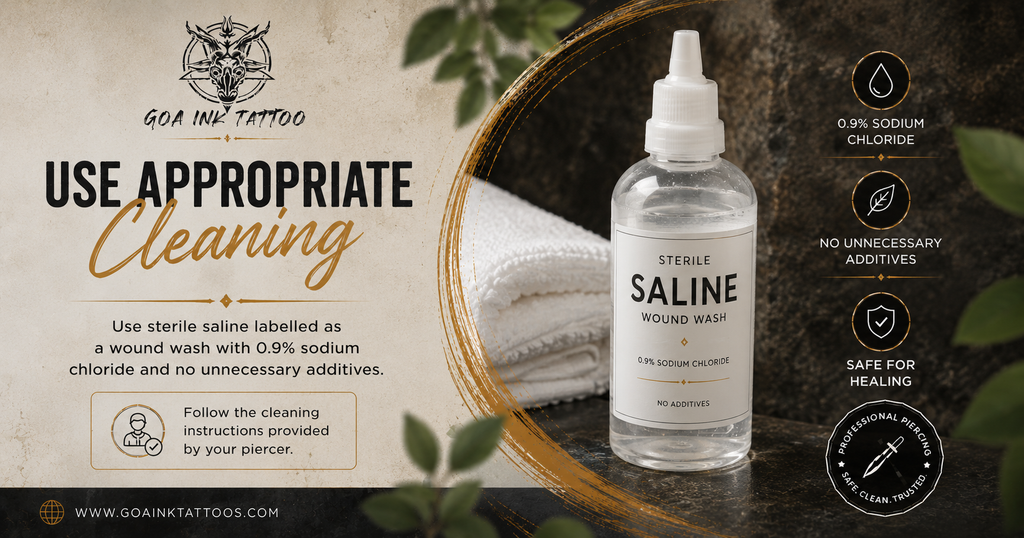
The Association of Professional Piercers recommends sterile saline labelled as a wound wash, with 0.9% sodium chloride as the listed ingredient and no unnecessary additives.
Follow the cleaning instructions provided by your piercer.
Don’t Rotate the Jewellery
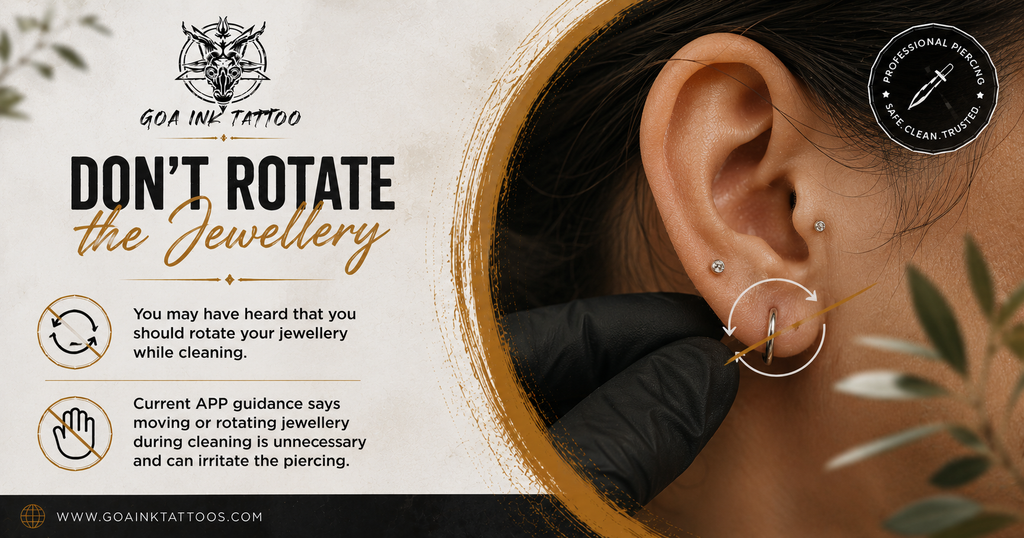
You may have heard that you should rotate your jewellery while cleaning.
Current APP guidance says moving or rotating jewellery during cleaning is unnecessary and can irritate the piercing.
Avoid Harsh Products
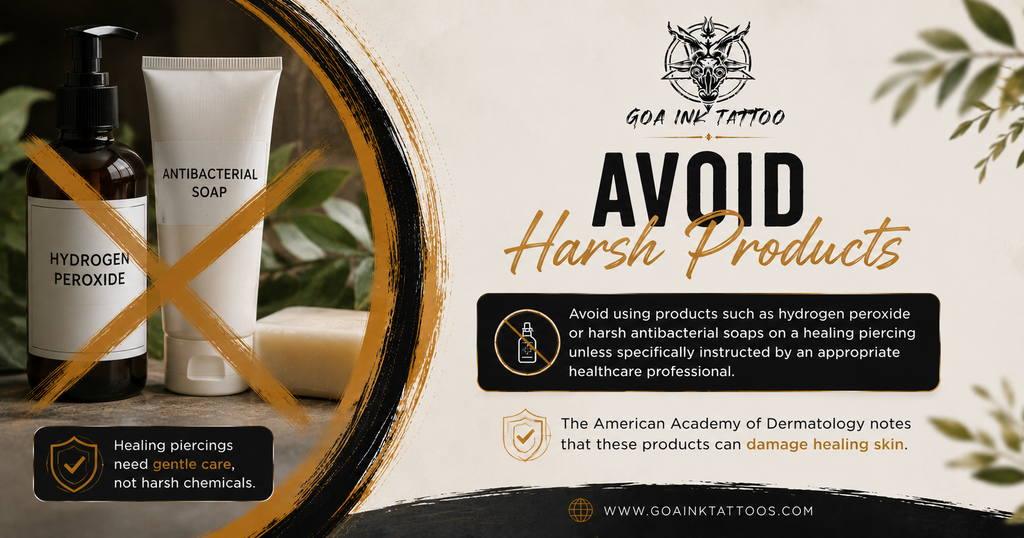
Avoid using products such as hydrogen peroxide or harsh antibacterial soaps on a healing piercing unless specifically instructed by an appropriate healthcare professional.
The American Academy of Dermatology notes that these products can damage healing skin.
What Should You Avoid During Piercing Healing?
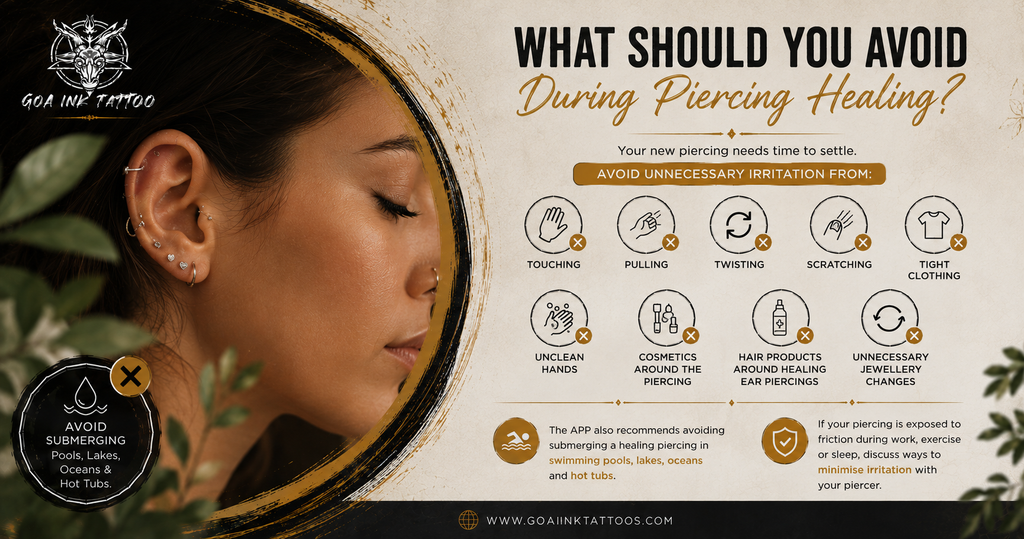
Your new piercing needs time to settle.
Avoid unnecessary irritation from:
✓ Touching
✓ Pulling
✓ Twisting
✓ Scratching
✓ Tight clothing
✓ Unclean hands
✓ Cosmetics around the piercing
✓ Hair products around healing ear piercings
✓ Unnecessary jewellery changes
The APP also recommends avoiding submerging a healing piercing in swimming pools, lakes, oceans and hot tubs.
If your piercing is exposed to friction during work, exercise or sleep, discuss ways to minimise irritation with your piercer.
How Long Does a Piercing Take to Heal?
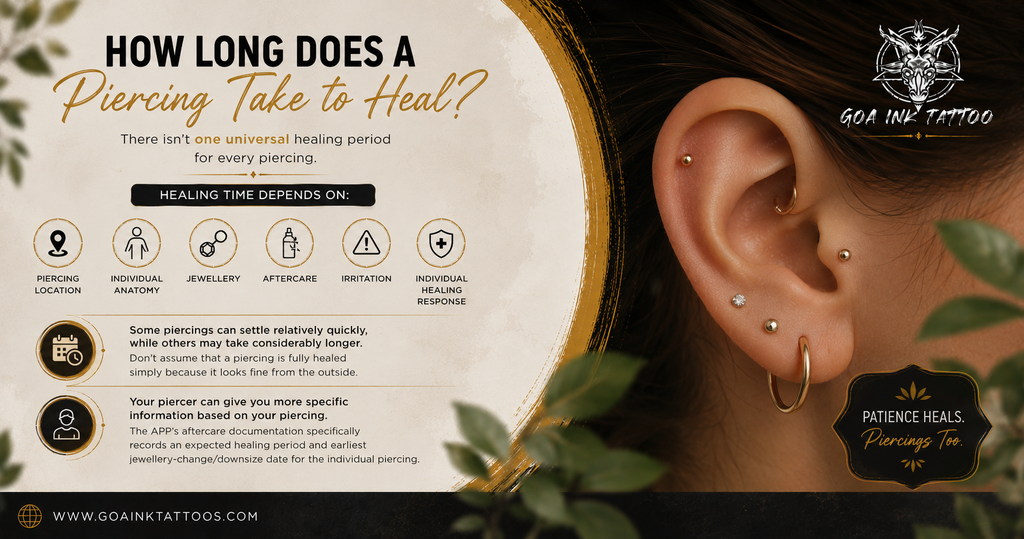
There isn’t one universal healing period for every piercing.
Healing time depends on:
✓ Piercing location
✓ Individual anatomy
✓ Jewellery
✓ Aftercare
✓ Irritation
✓ Individual healing response
Some piercings can settle relatively quickly, while others may take considerably longer.
Don’t assume that a piercing is fully healed simply because it looks fine from the outside.
Your piercer can give you more specific information based on your piercing.
The APP’s aftercare documentation specifically records an expected healing period and earliest jewellery-change/downsize date for the individual piercing.
When Can You Change Your Piercing Jewellery?
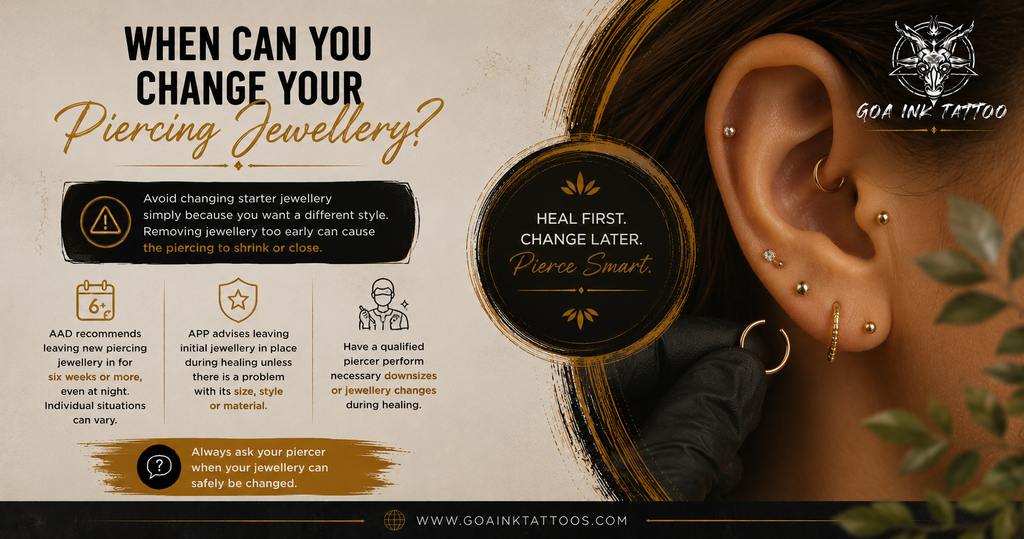
Avoid changing starter jewellery simply because you want a different style.
Removing jewellery too early can cause the piercing to shrink or close.
The American Academy of Dermatology recommends leaving new piercing jewellery in for six weeks or more, even at night, while noting that individual situations can vary.
The Association of Professional Piercers also advises leaving initial jewellery in place during healing unless there is a problem with its size, style or material, and recommends having a qualified piercer perform necessary downsizes or jewellery changes during healing.
Always ask your piercer when your jewellery can safely be changed.
Signs Your Piercing May Need Attention
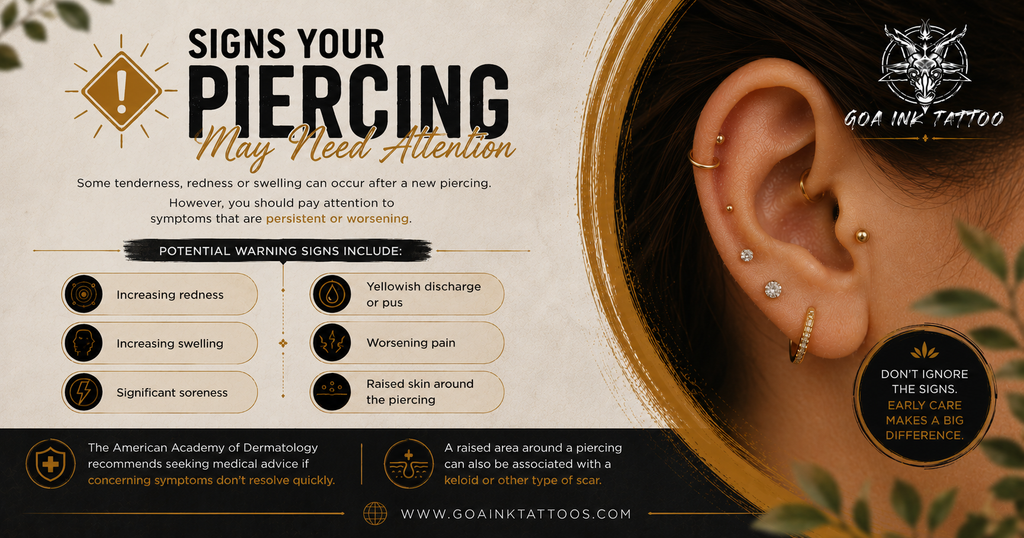
Some tenderness, redness or swelling can occur after a new piercing.
However, you should pay attention to symptoms that are persistent or worsening.
Potential warning signs include:
✓ Increasing redness
✓ Increasing swelling
✓ Significant soreness
✓ Yellowish discharge or pus
✓ Worsening pain
✓ Raised skin around the piercing
The American Academy of Dermatology recommends seeking medical advice if concerning symptoms don’t resolve quickly.
A raised area around a piercing can also be associated with a keloid or other type of scar.
Do not diagnose an infection yourself. If you are concerned about your piercing, speak with your piercer and seek appropriate medical advice.
Professional Piercing at Goa Ink Tattoo & Piercing Studio
At Goa Ink Tattoo & Piercing Studio, piercing is part of the studio’s body-art services in Greater Noida. The studio describes its Tattoo & Piercing service as personalised body art designed around individual expression.
Goa Ink is located at LG B15, Galaxy Diamond Plaza, Rajhans Cinema, near Gaur City Mall, Greater Noida, Uttar Pradesh 201009. The studio currently lists opening hours from 10:00 AM to 11:00 PM, Monday to Sunday.
If you’re considering a new piercing, use your consultation to discuss the placement, jewellery, procedure and aftercare before making your decision.
Why Choose Professional Piercing Over DIY Piercing?
DIY piercing may seem convenient, but piercing involves breaking the skin.
Attempting it yourself can introduce unnecessary risks related to hygiene, placement, equipment and jewellery.
A professional consultation gives you the opportunity to have the piercing assessed and performed by someone with appropriate experience.
The AAD specifically recommends choosing an experienced piercer in a licensed studio.
Your body deserves more than a quick shortcut.
Your Piercing Should Be About Style and Safety
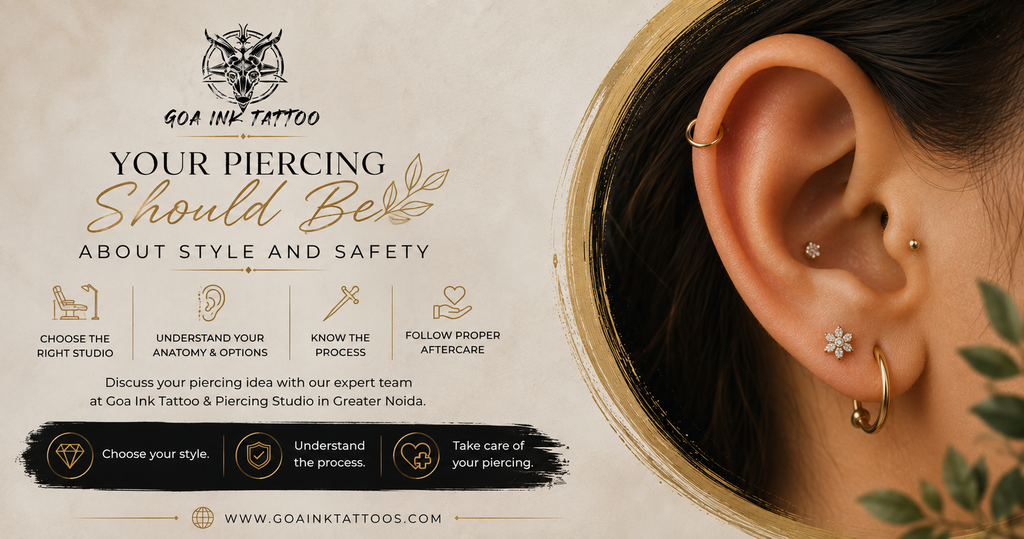
A piercing can be a small detail or a major part of your personal style.
But the jewellery you choose is only one part of the experience.
A successful piercing journey begins with choosing an appropriate studio, discussing your anatomy and jewellery options, understanding the procedure and following proper aftercare.
At Goa Ink Tattoo & Piercing Studio in Greater Noida, you can discuss your piercing idea with the team and understand the process before getting started.
Choose your style. Understand the process. Take care of your piercing.
Frequently Asked Questions About Professional Piercing
What is professional piercing?
Professional piercing is a body-piercing service performed by an experienced piercer using appropriate equipment, jewellery and safety practices.
How do I choose a professional piercing studio?
Look for an experienced piercer, appropriate studio hygiene, suitable jewellery, clear aftercare instructions and someone willing to answer your questions about the procedure and healing process.
What jewellery is best for a new piercing?
The appropriate material depends on the piercing and individual circumstances. The Association of Professional Piercers lists implant-grade titanium, certain implant-grade steel, niobium and appropriate solid gold among suitable jewellery materials.
Can I rotate my piercing jewellery?
Routine rotation isn’t necessary and may irritate the healing piercing. Follow your piercer’s specific aftercare instructions.
Can I remove my new piercing jewellery?
Avoid removing starter jewellery prematurely. A new piercing can shrink or close when jewellery is removed too soon. Ask your piercer when it is appropriate to change or downsize the jewellery.
What should I use to clean a new piercing?
The Association of Professional Piercers recommends sterile saline wound wash during healing. Avoid mixing your own strong salt solution, as it can be too concentrated and irritating.
Can I swim with a new piercing?
It is generally recommended to avoid submerging a healing piercing in pools, lakes, oceans and hot tubs.
What if my piercing becomes red or swollen?
Some initial irritation can occur, but worsening redness, swelling, pain or discharge should be taken seriously. If symptoms don’t resolve quickly or you suspect an infection, seek medical advice.
Does Goa Ink offer professional piercing in Greater Noida?
Yes. Tattoo & Piercing is listed among Goa Ink’s services at its Greater Noida studio.
Ready for Your New Piercing?
Whether it’s your first piercing or the next addition to your collection, start with the right information.
Visit Goa Ink Tattoo & Piercing Studio in Greater Noida and discuss your piercing with the team.
Goa Ink Tattoo & Piercing Studio
Location: LG B15, Galaxy Diamond Plaza, Rajhans Cinema, Near Gaur City Mall, Greater Noida, Uttar Pradesh 201009
Phone: +91 98117 72411
Opening Hours: Monday–Sunday | 10:00 AM–11:00 PM
Book Your Piercing Consultation