
Tattoo Aftercare 101: How to Care for Your New Tattoo
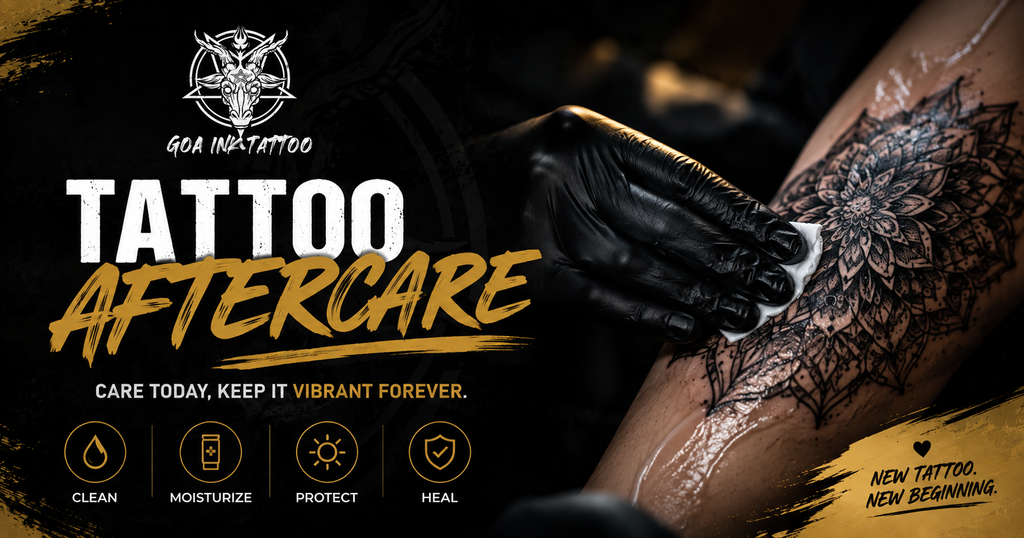
Getting a new tattoo is an exciting experience. You have chosen the design, discussed the placement, spent time with your tattoo artist and finally left the studio with a new piece of body art.
But your tattoo journey doesn’t end when the tattoo session is over.
Proper tattoo aftercare is an important part of caring for your new tattoo while your skin heals.
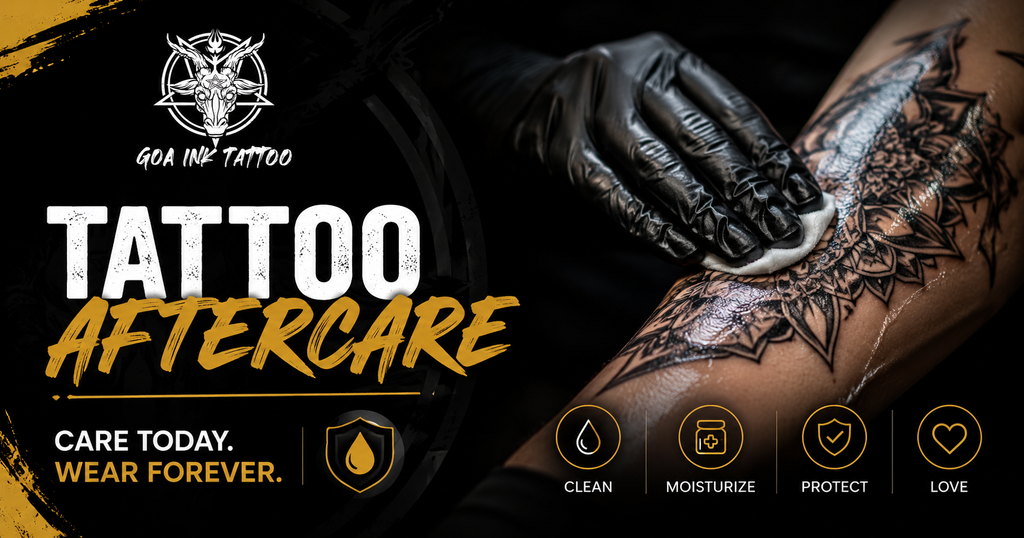
A fresh tattoo needs time and appropriate care. During the healing period, your skin may experience redness, tenderness, itching, peeling or light scabbing. These can be normal parts of the healing process, but knowing how to care for the tattoo can help you avoid unnecessary irritation.
At Goa Ink Tattoo & Piercing Studio in Greater Noida, we guide clients on caring for their tattoos after their sessions. Our website lists Tattoo Aftercare as one of our dedicated services.
Whether this is your first tattoo or you’re adding another piece to your collection, this guide will help you understand the basics of tattoo aftercare, tattoo care tips and healing tattoo practices.
Why Is Tattoo Aftercare Important?
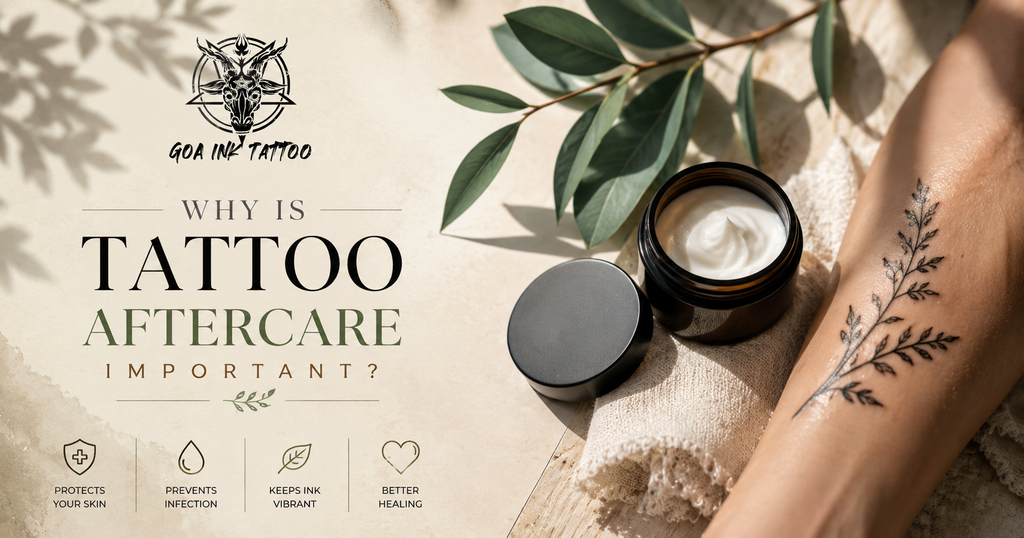
A new tattoo needs to be treated carefully while the skin recovers.
Your tattoo may look bright and bold immediately after the session, but its appearance can change as the skin heals. Peeling, itching and mild scabbing can occur during this period.
Good aftercare focuses on keeping the tattoo clean, avoiding unnecessary irritation and following the instructions provided by your tattoo artist.
Proper care can help you:
✓ Keep the healing area clean
✓ Reduce unnecessary irritation
✓ Avoid scratching and picking
✓ Protect the tattoo from excessive friction
✓ Support normal skin healing
✓ Maintain the appearance of your tattoo over time
Remember that every tattoo and every person’s skin can heal differently. Always follow the specific aftercare instructions provided by your tattoo artist.
Tattoo Healing Timeline: What to Expect
There is no exact timeline that applies to every tattoo. Your tattoo’s size, placement, design and your individual skin can influence the healing process.
However, understanding the general stages can make the process less stressful.
First Few Days: Fresh Tattoo
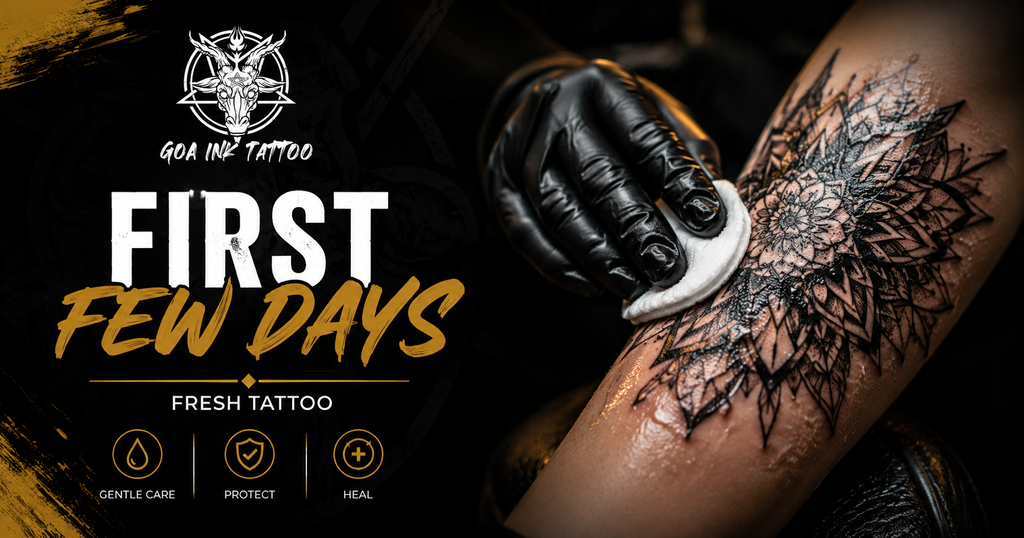
Immediately after your tattoo session, the area may appear:
✓ Bright or bold
✓ Red
✓ Slightly swollen
✓ Tender
✓ Sensitive
You may also notice a small amount of clear fluid or plasma around the tattoo. Some redness and swelling can be normal after getting tattooed.
Your artist will explain how to manage the dressing or protective covering applied to your tattoo.
Following Days: Peeling and Itching
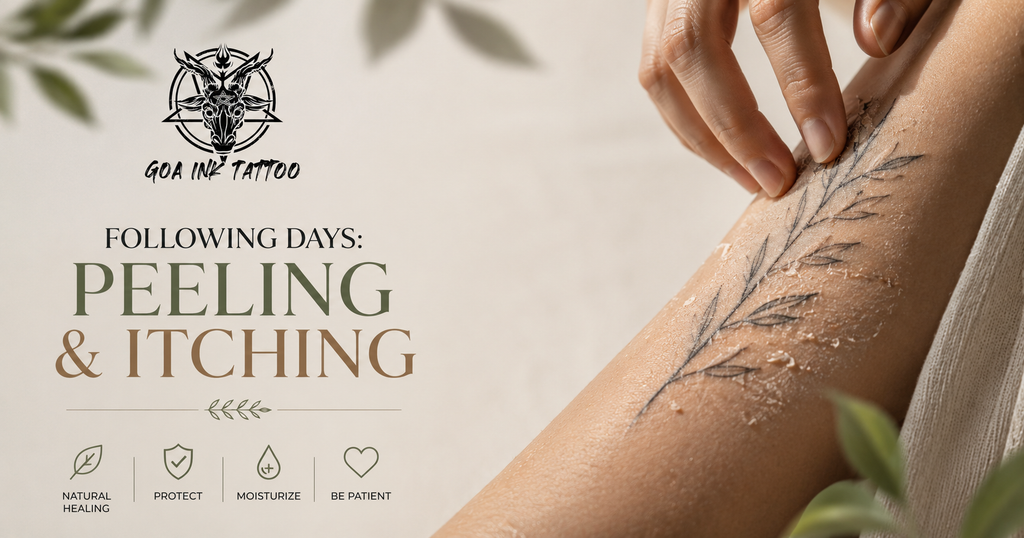
As your tattoo begins to heal, the skin may become itchy or start peeling.
It can sometimes look similar to dry or peeling skin.
Don’t scratch, peel or pick the tattoo.
Allow the skin to shed naturally.
Later Healing: Skin Settles
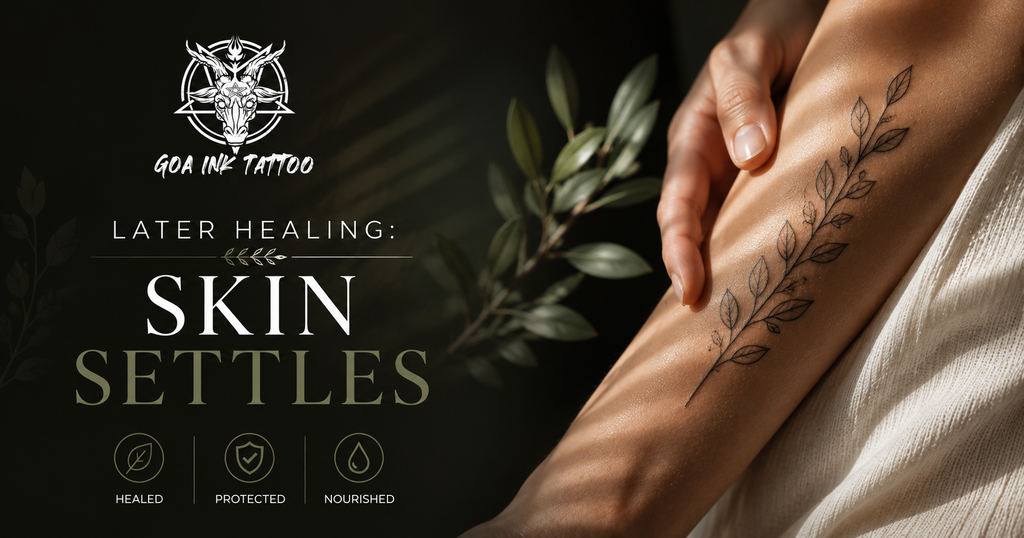
As healing progresses, the tattoo may look slightly different from how it appeared immediately after the session.
The skin gradually becomes smoother and less sensitive.
If you are concerned about unusual changes or symptoms, speak with your tattoo artist or a healthcare professional.
Step-by-Step Tattoo Aftercare
1. Follow Your Artist’s Dressing Instructions
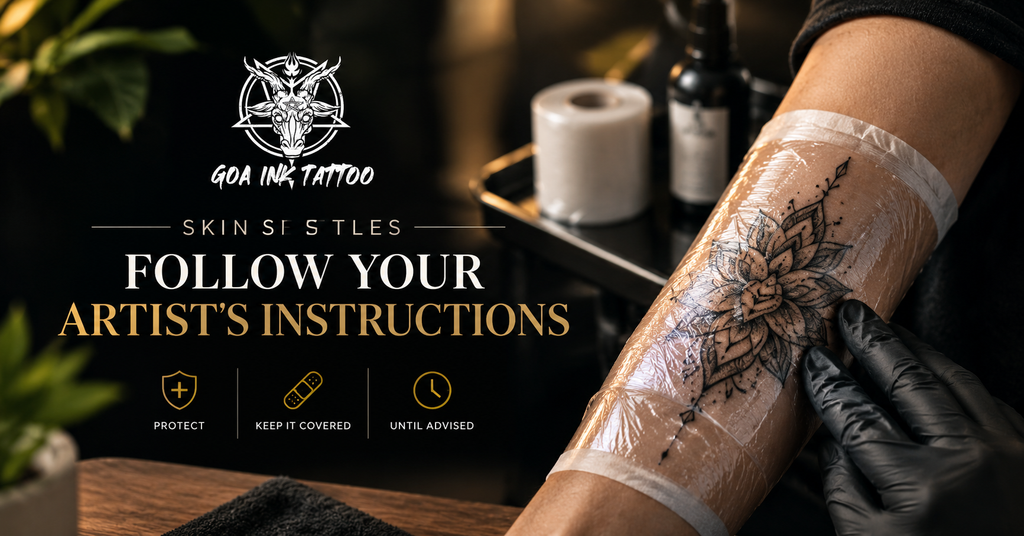
Your tattoo artist may cover your new tattoo with a protective dressing.
Different types of coverings can have different instructions.
Don’t remove the dressing earlier than recommended by your artist.
If your artist has given you specific instructions for the dressing used on your tattoo, follow those instructions rather than relying on a generic timeline.
2. Wash Your Hands Before Touching Your Tattoo
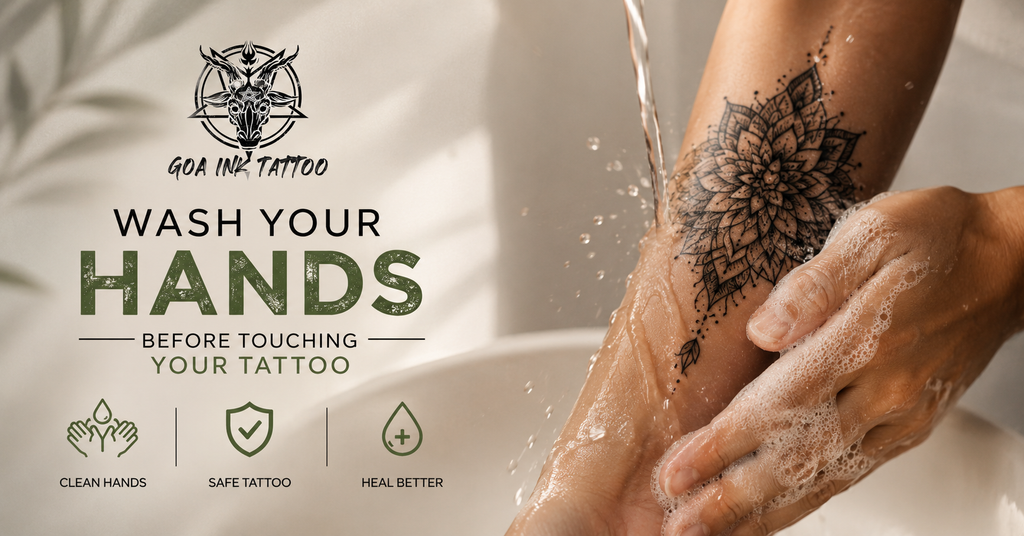
One of the simplest tattoo care tips is also one of the most important.
Wash your hands before touching a healing tattoo.
Avoid unnecessary touching throughout the day.
Clean hands can help reduce the chance of transferring dirt and germs to healing skin. Dermatology guidance also recommends washing hands before touching a healing tattoo.
3. Clean Your Tattoo Gently
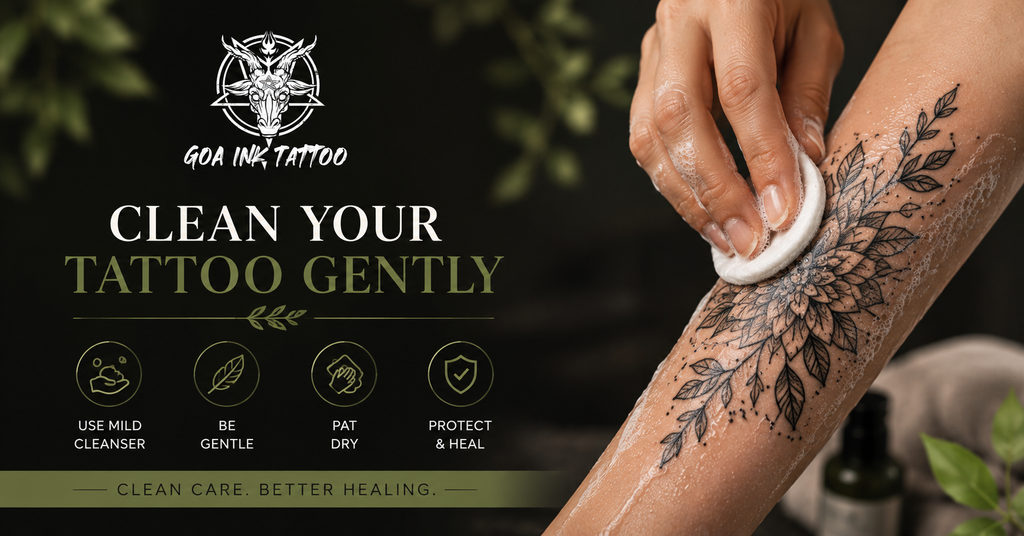
When your artist tells you that it’s time to clean the tattoo, do so gently.
Use the cleaning method and product recommended by your artist.
Avoid:
✓ Scrubbing
✓ Rough washcloths
✓ Aggressive rubbing
✓ Excessive washing
✓ Strong or heavily fragranced products unless specifically recommended
After cleaning, gently pat the area dry rather than rubbing it.
The goal is simple:
Clean the tattoo without unnecessarily irritating the skin.
4. Moisturize Appropriately
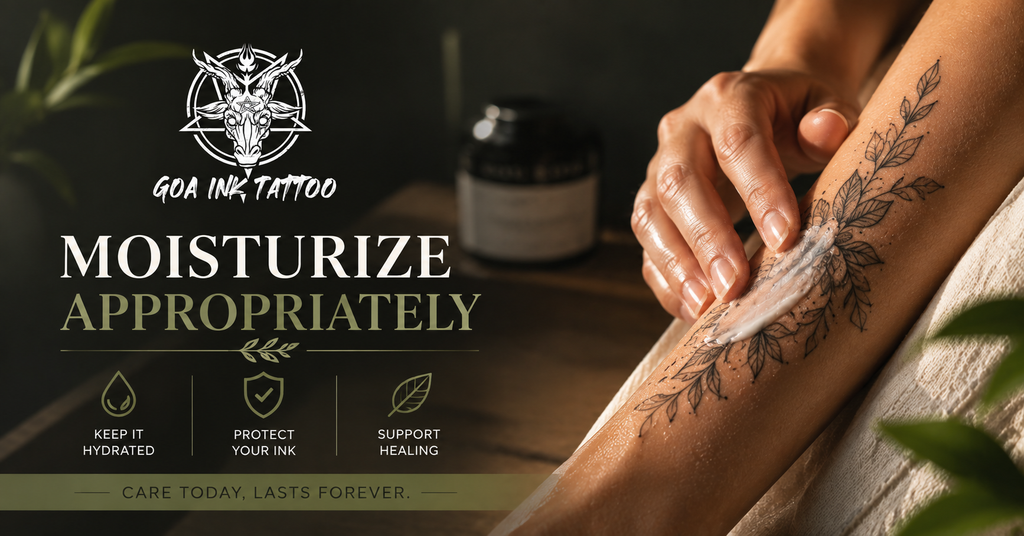
A healing tattoo can become dry or uncomfortable.
If your artist recommends moisturizing, apply the recommended product in an appropriate amount rather than covering the tattoo with a thick layer.
The American Academy of Dermatology recommends a water-based lotion or cream when tattooed skin feels dry and notes that petroleum-based products can contribute to fading.
If you are unsure which product to use, ask your tattoo artist rather than experimenting with multiple products.
Tattoo Aftercare: Things You Should Avoid
Knowing what not to do is just as important as knowing what to do.
Don’t Scratch Your Tattoo
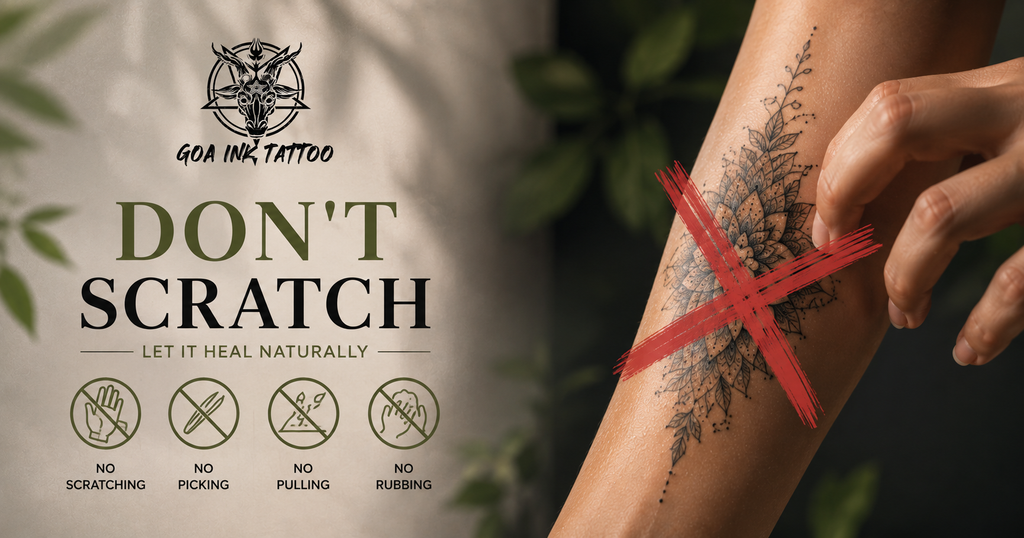
Itching can happen while a tattoo heals.
But scratching can irritate the skin.
Avoid:
- Scratching
- Picking scabs
- Pulling peeling skin
- Rubbing the tattoo
Let the skin heal naturally.
Avoid Soaking Your Healing Tattoo
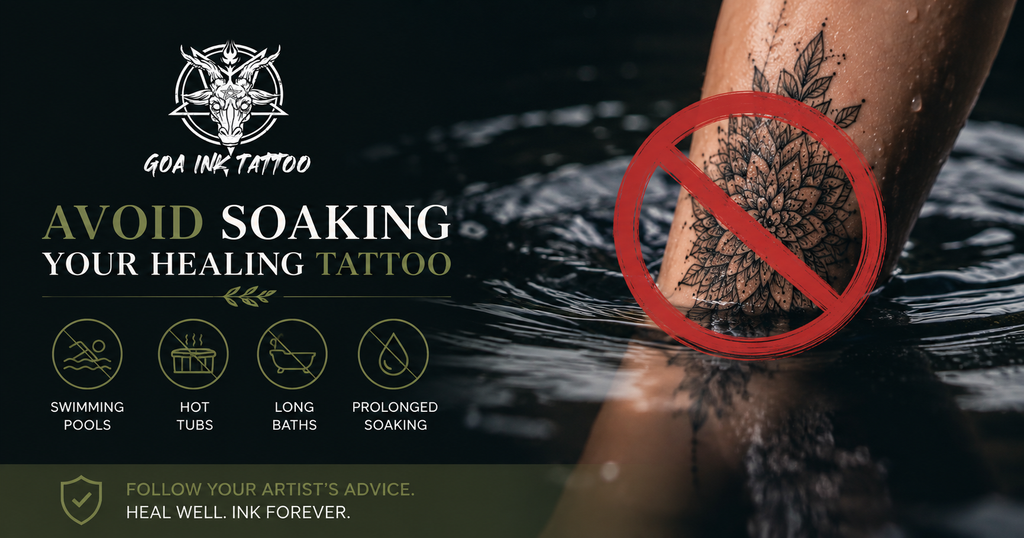
A healing tattoo should not be unnecessarily submerged in water.
This means avoiding activities such as:
✓ Swimming pools
✓ Hot tubs
✓ Long baths
✓ Other prolonged soaking
Follow your tattoo artist’s instructions about when you can safely return to these activities.
Protect Your Tattoo From the Sun
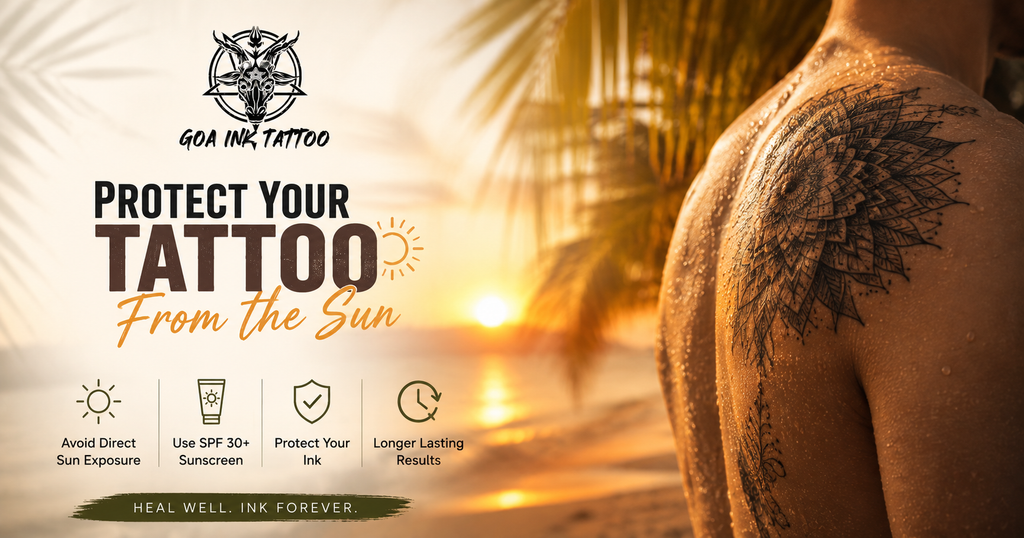
UV exposure can fade tattoo ink.
During the healing period, avoid unnecessary direct sun exposure and follow your artist’s instructions for protecting the tattoo.
Once the tattoo has healed, the American Academy of Dermatology recommends using a broad-spectrum, water-resistant sunscreen with SPF 30 or higher when your tattooed skin is exposed to sunlight.
Regular sun protection can help reduce fading over time.
Avoid Excessive Friction
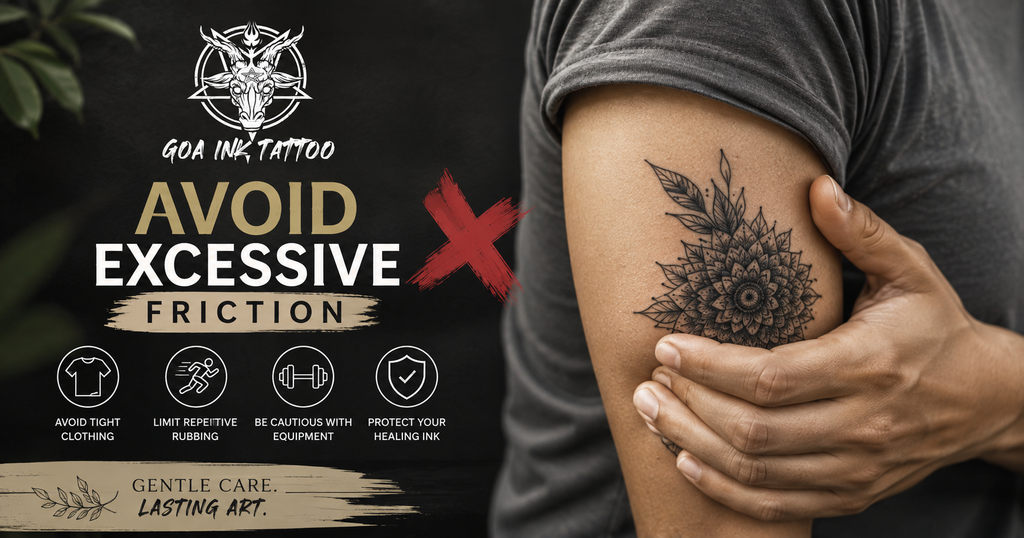
Clothing, equipment or repetitive rubbing can irritate a healing tattoo.
Where possible, avoid tight clothing or activities that repeatedly rub against the tattoo.
Pay particular attention if your tattoo is located in an area that experiences frequent movement or friction.
Can You Exercise After Getting a Tattoo?
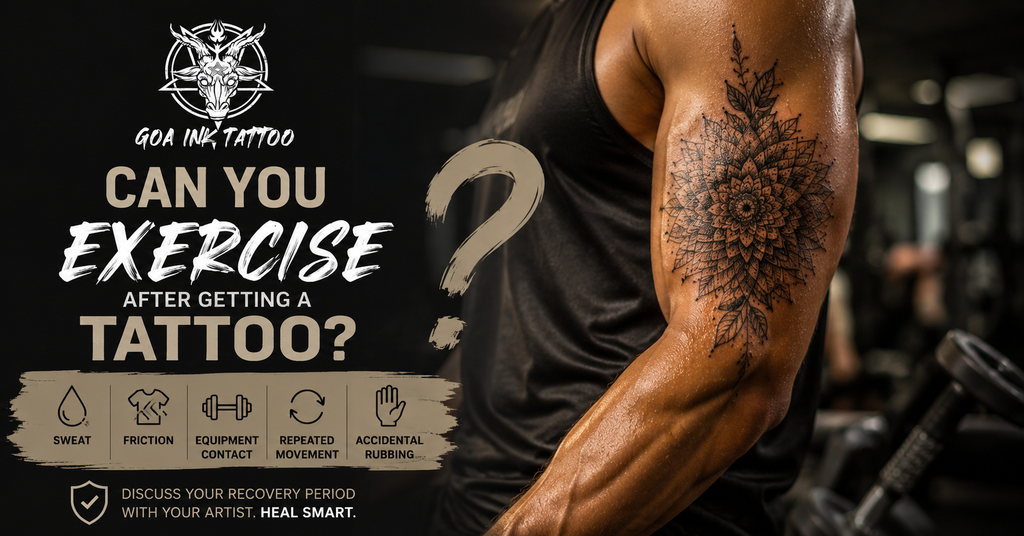
This depends on the tattoo’s placement and the type of activity.
Heavy exercise can involve:
✓ Sweat
✓ Friction
✓ Contact with equipment
✓ Repeated movement
✓ Accidental rubbing
If your tattoo is in an area that will be heavily affected by your workout, discuss the appropriate recovery period with your tattoo artist.
Avoid activities that could unnecessarily irritate the healing tattoo.
What Products Should You Use?
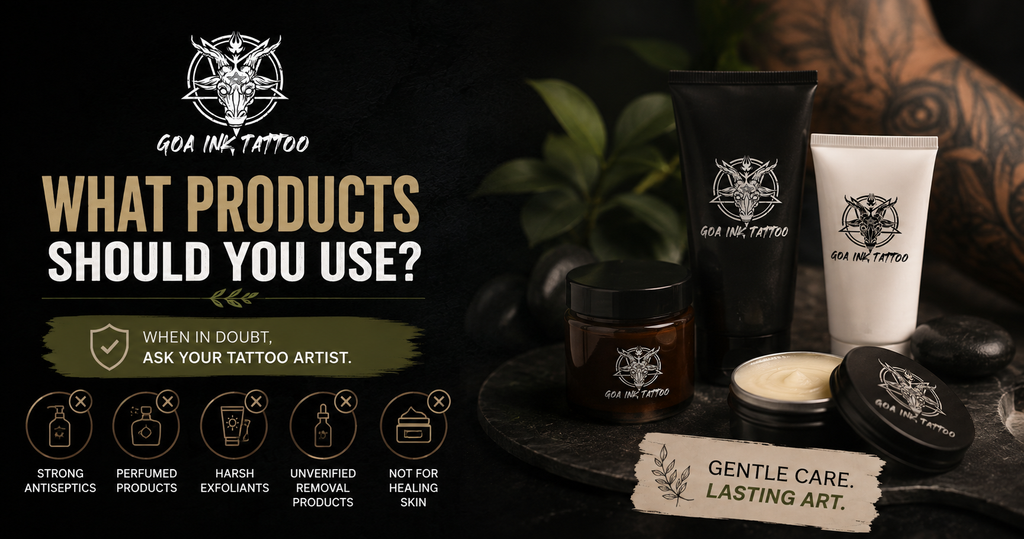
Your tattoo artist may recommend specific products depending on your tattoo and skin.
Generally, look for gentle products when instructed to moisturize.
The American Academy of Dermatology recommends a water-based lotion or cream for tattooed skin that feels dry.
Avoid randomly applying:
✓ Strong antiseptics
✓ Perfumed products
✓ Harsh exfoliants
✓ Unverified tattoo-removal products
✓ Products not recommended for healing skin
When in doubt, ask your tattoo artist before applying a new product.
Is Peeling After a Tattoo Normal?
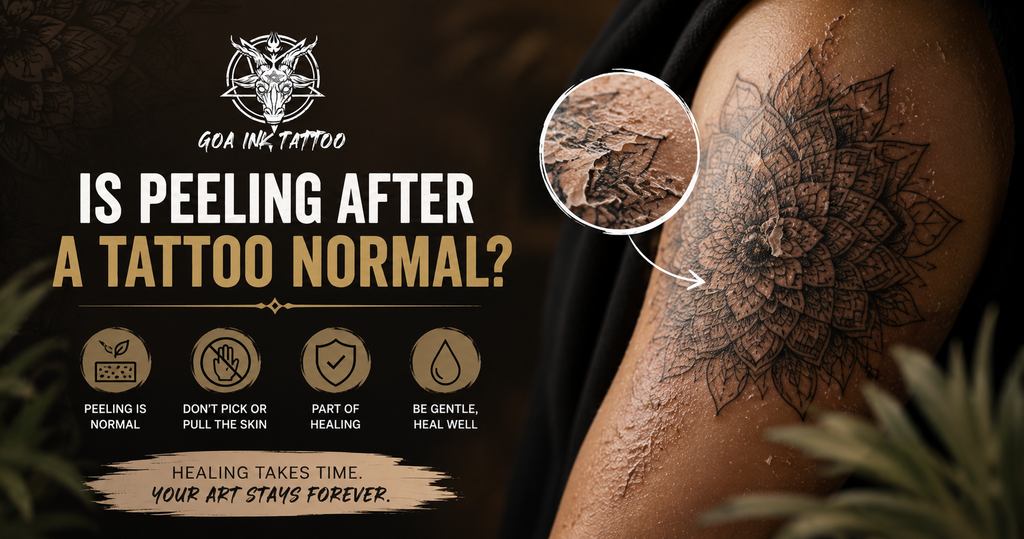
Peeling can occur during the healing process.
You may notice small flakes of skin coming away from the tattoo.
This doesn’t necessarily mean something is wrong.
Don’t pull the peeling skin off.
Similarly, if small scabs form, don’t pick them.
Normal healing can involve redness, soreness, clear fluid, itching, flaking and scabbing.
However, symptoms that become increasingly severe should not be ignored.
Tattoo Aftercare Warning Signs
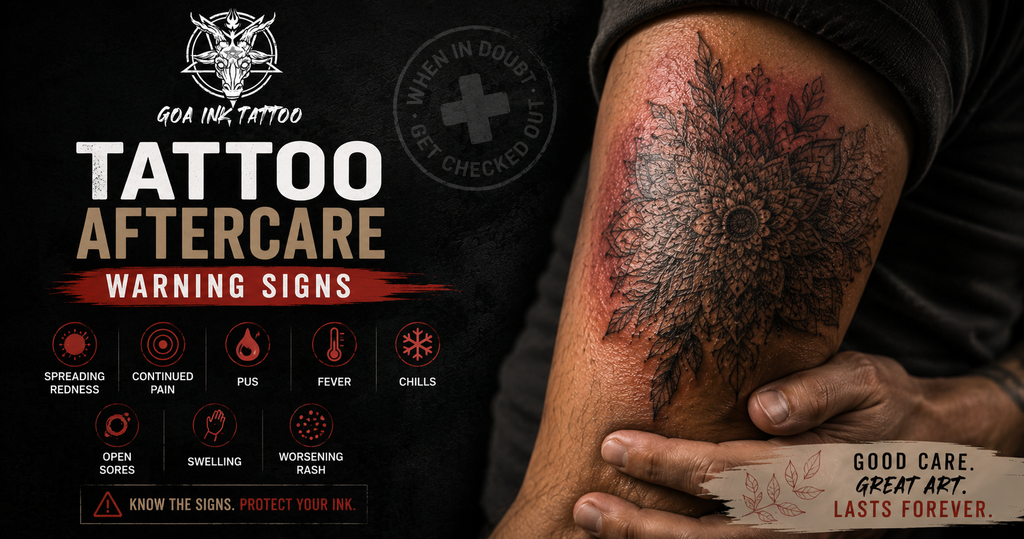
Knowing the difference between normal healing and potential problems is important.
Some mild redness, swelling, soreness, itching and clear fluid can occur after getting a tattoo.
However, contact a healthcare professional if you notice concerning symptoms such as:
✓ Redness that spreads or becomes darker
✓ Pain that continues or gets worse
✓ Pus
✓ Fever
✓ Chills
✓ Open sores
✓ Significant swelling
✓ A painful or worsening rash
These can be signs of infection or another skin reaction and should be medically assessed.
If you experience a severe reaction, including difficulty breathing, intense swelling, dizziness or other serious symptoms, seek urgent medical attention.
Tattoo aftercare information cannot replace medical advice.
How to Keep Your Tattoo Looking Good Long-Term
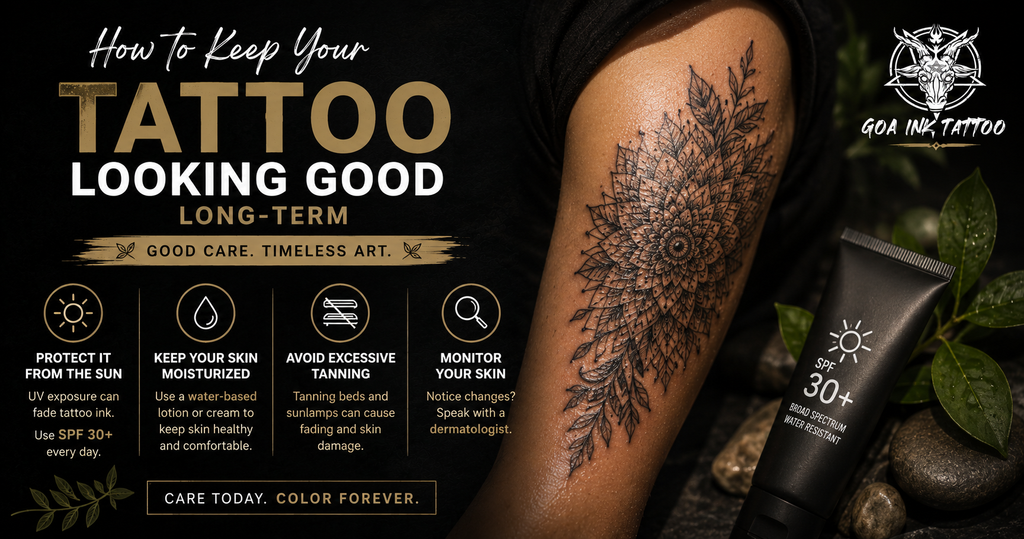
Tattoo care doesn’t end when the initial healing period is over.
Once your tattoo has healed, long-term skin care can help maintain its appearance.
Protect It From the Sun
UV exposure can fade tattoo ink.
Use broad-spectrum, water-resistant SPF 30 or higher when your tattooed skin is exposed to the sun.
Keep Your Skin Moisturized
If your tattooed skin becomes dry, a suitable water-based lotion or cream can help keep the skin comfortable.
Avoid Excessive Tanning
Tanning beds and sunlamps can contribute to tattoo fading and UV-related skin damage.
Monitor Your Skin
If you notice unusual or persistent changes in tattooed skin, speak with a dermatologist. Tattoo ink can sometimes make it more difficult to see changes in moles or other skin spots.
Common Tattoo Aftercare Mistakes
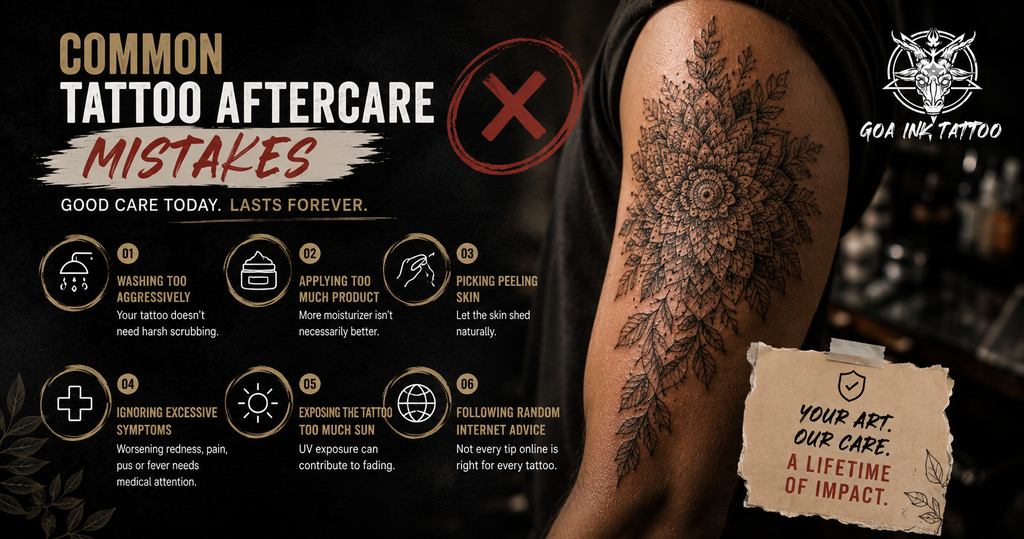
Even with the best intentions, people sometimes make simple mistakes after getting tattooed.
Washing Too Aggressively
Your tattoo doesn’t need harsh scrubbing.
Applying Too Much Product
More moisturizer isn’t necessarily better. Follow your artist’s product and application instructions.
Picking Peeling Skin
Let the skin shed naturally.
Ignoring Excessive Symptoms
Don’t assume every reaction is normal. Worsening redness, pain, pus or fever should be medically assessed.
Exposing the Tattoo to Too Much Sun
UV exposure can contribute to fading.
Following Random Internet Advice
Not every tattoo aftercare tip online is appropriate for every tattoo.
Your artist’s instructions should be your starting point.
Tattoo Aftercare at Goa Ink Tattoo & Piercing Studio
At Goa Ink Tattoo & Piercing Studio in Greater Noida, we care about your tattoo beyond the actual tattooing session.
Our website lists Tattoo Aftercare as one of our dedicated services and describes it as guidance to help clients care for their tattoo after getting inked.
We understand that first-time clients may have questions about:
✓ Cleaning
✓ Moisturizing
✓ Peeling
✓ Itching
✓ Sun exposure
✓ Tattoo healing
✓ Long-term tattoo care
Our team can explain the aftercare instructions relevant to your tattoo and help you understand what to expect during the healing process.
Goa Ink is located at LG B15, Galaxy Diamond Plaza, Rajhans Cinema, near Gaur City Mall, Greater Noida, Uttar Pradesh 201009, and the studio currently lists opening hours of 10:00 AM–11:00 PM, Monday–Sunday.
Your Tattoo Deserves Proper Care
Your tattoo is a permanent piece of artwork on your skin.
Taking care of it after your session is an important part of the experience.
Keep your tattoo clean according to your artist’s instructions, avoid scratching and unnecessary irritation, protect healed tattooed skin from excessive UV exposure, and pay attention to unusual symptoms.
Most importantly, don’t hesitate to ask questions.
At Goa Ink Tattoo & Piercing Studio, our team is here to help you understand your tattoo aftercare and make your post-tattoo experience as straightforward as possible.
Good tattoo care starts with good aftercare.
Frequently Asked Questions About Tattoo Aftercare
How long does a tattoo take to heal?
Healing times vary between individuals and tattoos. The surface of the tattoo may settle over the following weeks, while deeper skin healing can continue for longer. Follow your artist’s specific aftercare instructions.
Can I shower after getting a tattoo?
Follow your artist’s instructions regarding when and how to wash your tattoo. Generally, avoid soaking the healing tattoo and gently pat it dry after cleaning.
Can I swim after getting a tattoo?
Avoid submerging a healing tattoo in swimming pools, hot tubs or other bodies of water until it has healed and your tattoo artist confirms it is appropriate to do so.
Is peeling normal after getting a tattoo?
Peeling and flaking can be part of the normal healing process. Don’t pick or pull the peeling skin.
Can I scratch my healing tattoo?
It’s best not to scratch or pick a healing tattoo. If itching becomes difficult to manage or you notice an unusual reaction, speak with your tattoo artist or a healthcare professional.
When should I worry about my tattoo?
Seek medical advice if you notice spreading redness, worsening pain, pus, fever, chills, open sores or other concerning symptoms.
When should I use sunscreen on my tattoo?
Avoid unnecessary direct sun exposure while your tattoo is healing. Once healed, use broad-spectrum, water-resistant SPF 30 or higher whenever tattooed skin is exposed to sunlight.
Does Goa Ink provide tattoo aftercare guidance?
Yes. Tattoo Aftercare is currently listed as one of Goa Ink’s services. The studio provides guidance to help clients care for their tattoos after getting inked.
Got a New Tattoo? Take Care of Your Ink.
Whether you’re getting your first tattoo or adding another piece to your collection, proper aftercare is an important part of the tattoo experience.
Visit Goa Ink Tattoo & Piercing Studio in Greater Noida for professional tattooing and aftercare guidance.
Goa Ink Tattoo & Piercing Studio
Location: LG B15, Galaxy Diamond Plaza, Rajhans Cinema, Near Gaur City Mall, Greater Noida, Uttar Pradesh 201009
Phone: +91 98117 72411
Opening Hours: Monday–Sunday | 10:00 AM–11:00 PM
Enquire Now